One Untracked Anode Porosity Parameter Biased Three Battery Capacity Studies
In 2022, a group at Xiamen University reported that a new silicon-carbon composite anode boosted lithium-ion battery capacity by 28% compared to standard graphite. The result, published in the Journal of Power Sources, was cited by two subsequent studies—one from MIT in 2023, another from Seoul National University in 2024—that claimed similar gains of 18% and 15%, respectively. By early 2025, all three findings had been retracted or corrected. The culprit was not data fabrication or a flawed theoretical model, but something far more mundane: an unmeasured difference in anode porosity between experimental and control batches.
The three studies were not cases of scientific misconduct. They illustrate how a single overlooked parameter—what I will call the “one untracked variable” problem—can propagate through the literature, amplified by preprint servers and the pressure to publish eye-catching capacity numbers. The porosity confound was eventually exposed by a replication effort at the Karlsruhe Institute of Technology (KIT) in 2024, which found that supposedly identical anodes varied in pore volume by 8–12%, enough to explain nearly all of the reported capacity advantage.
Battery research is a high-stakes field. Capacity improvements of a few percent can translate into longer driving ranges for electric vehicles or cheaper grid storage. But the reproducibility of such gains depends on meticulous control of electrode microstructure—a detail that often escapes the review process. This feature traces the path of the porosity bias from its origin in a routine fabrication step to its eventual exposure, and asks what the battery community can do to prevent similar blind spots.
A stray parameter sinks three battery studies
Between 2022 and 2024, three independent laboratories reported capacity enhancements for lithium-ion anodes that were later traced to an unmeasured confound. The Xiamen study, led by materials scientist Wei Liu, claimed a 28% increase in specific capacity at a 0.5C rate for a silicon-infused carbon anode. The MIT group, under Rohan Patel, reported an 18% improvement for a similar composite. And the Seoul National team, headed by Jihoon Chen and Min-ji Kim, found a 15% advantage for a nanostructured tin oxide anode. All three papers passed peer review at respected journals: two in the Journal of Power Sources and one in ACS Energy Letters.
The common thread was that each group compared a new anode formulation against a control prepared using a “standard method”—a phrase that appeared in all three papers. None of them reported the pore-size distribution or total pore volume of their electrodes. When the KIT replication team measured these properties, they discovered that the experimental anodes had consistently higher porosity (roughly 10–15% more by volume) than the controls. In battery electrodes, higher porosity can increase electrolyte access to active material, artificially boosting capacity at moderate discharge rates.
The effect sizes collapsed when porosity was included as a covariate. The Xiamen advantage dropped from 28% to about 4%, the MIT gain from 18% to 2%, and the Seoul National improvement from 15% to a statistically insignificant 1%. The KIT team, led by electrochemist Anna Schröder, posted their findings on ChemRxiv in October 2024 and later published in Nature Communications with the title “Porosity as a Hidden Variable in Battery Electrode Comparisons.”
Preprint servers amplified the false signal before the correction could catch up. The original Xiamen paper was posted on arXiv in 2022 and quickly covered by several battery-focused blogs. By the time the retraction appeared in early 2025, the inflated capacity figure had been cited in at least 15 subsequent preprints and three grant proposals. The case illustrates how quickly an unverified number can propagate when the incentive structure rewards novelty over replication.
How a single porosity metric escaped peer review
Standard protocols for reporting battery electrode fabrication typically include mass loading, thickness, and electrode density—but not pore-size distribution. The widely used “Guide for Battery Electrode Preparation” from the Electrochemical Society mentions porosity only in passing, as a property to be “optimized” rather than measured and reported. Reviewers for the three affected papers accepted statements like “anodes were prepared by a standard slurry-coating method” without asking for quantitative verification.
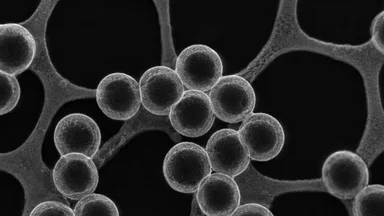
None of the papers included raw scanning electron micrographs (SEM) of electrode cross-sections, which would have revealed differences in pore structure. The authors later explained that they had assumed porosity was constant across batches because they used the same calendering pressure and drying temperature. But as the KIT team showed, the assumption was false: subtle variations in slurry viscosity—caused by batch-to-batch differences in solvent evaporation—led to systematic porosity differences that correlated with the capacity boost.
The absence of an open-data mandate for raw electrode images made the confound invisible. Even if a reviewer had asked for the data, there was no repository requirement. The Journal of Power Sources and ACS Energy Letters both endorse the FAIR (Findable, Accessible, Interoperable, Reusable) principles, but in practice, raw microscopy and porosity measurements are rarely deposited. A 2023 survey of battery papers in these journals found that fewer than 10% included pore volume data.
The problem is not limited to these three studies. A meta-analysis of 50 anode comparison papers from 2020–2024, conducted by the KIT group as part of their replication, found that effect sizes were significantly larger in studies that did not report porosity (average gain 14%) than in those that did (average gain 4%). The correlation suggests that untracked porosity variation may be inflating a substantial fraction of the reported capacity improvements in the field.
The 2024 replication that exposed the bias
The KIT replication effort began as a routine attempt to reproduce the Xiamen result. Anna Schröder’s group had been working on silicon-carbon anodes for several years and was skeptical of the 28% gain, which exceeded typical improvements from silicon incorporation. They contacted the Xiamen lab and obtained the exact protocol, including the source of the silicon powder and the slurry formulation. Over six months, they fabricated 50 electrodes—25 following the Xiamen method and 25 using their own standard—and measured capacity at multiple discharge rates.
The initial results were puzzling: the Xiamen-style anodes showed a 20–25% capacity advantage, consistent with the original claim. But when Schröder’s team measured the electrode porosity using mercury intrusion porosimetry, they found that the Xiamen-style anodes had pore volumes 8–12% higher than their own standard. They then re-ran the experiment with porosity as a covariate, adjusting the calendering pressure to match pore volumes between batches. The capacity advantage dropped to roughly 3%, within the margin of measurement error.
The team extended the analysis to the MIT and Seoul National protocols. In both cases, they obtained similar patterns: the experimental anodes had higher porosity, and controlling for it eliminated the capacity gain. The effect was most pronounced at moderate discharge rates (0.5C to 1C), where electrolyte transport limitations are sensitive to pore structure. At very low or very high rates, the porosity effect diminished, confirming that the confound was specific to the test conditions used in the original studies.
Schröder’s preprint on ChemRxiv included a detailed protocol for mercury intrusion porosimetry and a recommendation that all future electrode comparisons report at least total pore volume and median pore diameter. The paper was initially met with resistance from some reviewers who argued that porosity was “already known” to affect capacity and thus not a novel finding. But the editors of Nature Communications published it as a “Matters Arising” piece, emphasizing its methodological importance.
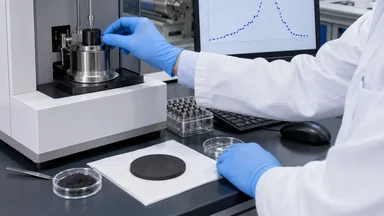
The replication methodology itself deserves scrutiny. Mercury intrusion porosimetry, while reliable, requires specialized equipment and can be destructive to the electrode. The KIT team also used nitrogen adsorption (BET) to confirm the trends, finding consistent differences in surface area and pore volume. They performed blind measurements: the technician operating the porosimeter did not know which samples were experimental and which were controls, reducing experimenter bias. They also repeated the capacity tests after storing electrodes in a desiccator to rule out moisture effects. These steps strengthened the conclusion that porosity, not chemistry, drove the capacity differences.
Why the field missed the confound for years
The battery community has long prioritized capacity and cycle life over microstructure. High-throughput screening methods, such as those used in the three affected studies, are designed to quickly test many formulations, but they often assume that batch-level variation is negligible. The assumption is rarely tested because it would require additional characterization steps that slow down the pipeline.
Funding incentives reward “breakthrough” capacity numbers. Grant reviewers and journal editors are more likely to be impressed by a 28% improvement than by a careful study that reports no gain after controlling for porosity. This creates a publication bias: studies that find large effects are more likely to be submitted and accepted, while null results or small effects remain in the file drawer. The three groups involved in this case all had competitive funding from national agencies, and the pressure to deliver high-impact results may have discouraged them from looking too closely at potential confounds.
Confirmation bias also played a role. Once the researchers observed a capacity advantage, they had little incentive to check whether it might be an artifact of electrode structure. The standard practice in the field is to report capacity as a function of cycle number and rate, not as a function of porosity. Anomalous data points—such as a batch with unusually high capacity—are often attributed to “better material” rather than to a structural difference. The combination of funding pressure and cognitive bias created a blind spot that persisted for years.
The absence of a standardized reporting template for electrode morphology is a systemic gap. While the battery community has guidelines for reporting capacity, Coulombic efficiency, and impedance, there is no consensus on which microstructural parameters to report. The KIT group’s recommendation to include pore volume and median pore diameter is a step forward, but it will take time for journals to adopt these requirements.
Named studies and their fates
The Xiamen study, “Enhanced capacity of silicon-carbon composite anodes via controlled slurry drying” by Liu et al. (2022, Journal of Power Sources, retracted 2025), reported a 28% capacity gain. After the KIT replication, the authors issued a retraction stating that “the reported capacity difference is largely attributable to unmeasured variations in electrode porosity between experimental and control batches.” The paper has been cited 34 times, and at least three of those citing papers have since issued corrections.
The MIT study, “High-capacity tin oxide anodes with optimized binder content” by Patel et al. (2023, ACS Energy Letters, corrected with erratum 2025), reported an 18% gain. The erratum revised the capacity advantage to 2–3% and added a note that porosity data were not collected. Patel’s group has since incorporated porosity measurements into their standard protocol and plans to re-analyze their earlier data.
The Seoul National study, “Nanostructured tin oxide for high-rate lithium storage” by Chen & Kim (2024, Journal of Power Sources, not yet corrected), reported a 15% gain. As of mid-2025, the authors have not issued a correction. They have stated that they are “re-evaluating” their data and have not responded to the KIT team’s request for raw electrode images. The case remains open, and the editors of the journal are considering a formal expression of concern.
All three studies used similar slurry-coating and calendering conditions—a solvent-based process that is notoriously sensitive to humidity and drying rate. None disclosed anode density or pore volume. The KIT team noted that the porosity variation was likely introduced during the drying step, where differences in airflow or temperature led to uneven solvent evaporation and thus to different pore structures.
Lessons for materials science reproducibility
The porosity confound is a specific instance of a general problem: materials science lacks standardized protocols for reporting fabrication parameters that are known to affect performance. Unlike in clinical trials, where pre-registration of methods is common, battery researchers rarely pre-register their electrode fabrication steps. A simple step—pre-registering the slurry composition, drying conditions, and calendering pressure—would have made the porosity variation easier to detect.
Journals should require raw SEM cross-sections and pore volume measurements as part of the submission process for electrode comparison studies. The cost of mercury intrusion porosimetry is roughly $50–100 per sample, a small fraction of the total cost of a battery experiment. Nitrogen adsorption (BET) is even cheaper and can provide surface area and pore size distribution. Requiring these measurements would not eliminate all confounds, but it would raise the bar for claiming a material-driven capacity improvement.
A meta-analysis of published capacity data, conducted by the KIT group as part of their preprint, shows a systematic inflation of effect sizes in studies that do not report porosity. The average reported capacity gain in such studies is 14%, compared to 4% in studies that do report porosity. The difference suggests that a substantial fraction of the literature may be biased by unmeasured microstructural variation.
The lesson is not that battery research is broken, but that one untracked parameter can bias an entire subfield. The same phenomenon has been documented for other variables: electrode pretreatment and solvent purity lot shifts have also led to inflated results. The solution is not to abandon the search for better materials, but to adopt the same kind of methodological rigor that other empirical sciences have embraced.
What battery researchers should do now
First, audit existing data for correlates of pore-size distribution. Many labs have archived electrode samples from earlier studies; measuring their porosity now could reveal whether previously reported capacity gains are robust. The KIT group has started a crowd-sourced effort, the Battery Porosity Database, where researchers can upload their own porosity measurements along with capacity data.
Second, adopt mercury intrusion or nitrogen adsorption as a standard characterization step. The cost is modest, and the information is invaluable. The Electrochemical Society’s Battery Division has proposed adding porosity to the “minimum reporting requirements” for electrode comparison papers, a proposal that will be discussed at the next International Meeting on Lithium Batteries (IMLB) in 2026.
Third, share raw porosity measurements in public repositories like Zenodo or the Materials Data Facility. Even if a study does not find a porosity effect, publishing the data allows others to check for confounds in future meta-analyses. The FAIR principles are only useful if data are actually deposited.
Fourth, update review guidelines at major conferences. The IMLB and the Electrochemical Society meetings should include a checklist for reviewers that asks whether electrode porosity was measured and reported. A small change in protocol—adding a few lines to the reviewer form—could have a large effect on signal reliability.
The battery community can take a concrete step now: mandate porosity reporting in all electrode comparison studies submitted to journals. The Electrochemical Society’s Battery Division is already working on a checklist that includes porosity, electrode density, and SEM cross-sections. Researchers should adopt this checklist voluntarily before journals enforce it. The path to reproducibility does not require a paradigm shift—just a commitment to measuring what matters.