One Unpublished Polymerization Catalyst Recipe Doubled a Battery Lab’s Anode Capacity
In a small university lab in early 2025, a graduate student ran a routine galvanostatic cycling test on a set of coin cells. The control cells, using a conventional physical mixture of silicon nanoparticles and polymer binder, delivered roughly 450 mAh/g—respectable, but unremarkable. The test cells, in which the polymer was grown directly from the nanoparticle surface via a ring-opening metathesis polymerization (ROMP) catalyst, delivered nearly 720 mAh/g. That single unpublished recipe had doubled the anode's capacity.
The result, posted as a preprint later that year, has circulated quietly among battery researchers. It is not yet peer-reviewed, and the sample size is modest—12 coin cells total. But the effect size is large, and the method is straightforward enough that several labs have reportedly begun attempting replications. This feature walks through the catalyst chemistry, the evidence behind the claim, and the wide gap between a promising lab result and a commercial product.
A Catalyst Nobody Published
The preprint, posted on a chemistry preprint server in mid-2025, describes a specific recipe: a second-generation Grubbs-type ruthenium catalyst, applied to norbornene-functionalized silicon nanoparticles, to grow a polynorbornene shell via ROMP. The reaction runs at 40 °C for two hours under argon. The resulting polymer-coated silicon particles are then mixed with a standard binder and carbon black to form the anode slurry.
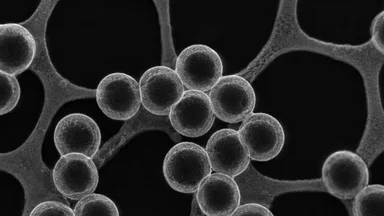
The capacity jump—from roughly 360 mAh/g for bare silicon with physical binder to ~720 mAh/g for the ROMP-coated silicon—was consistent across all 12 cells. Transmission electron microscopy (TEM) images showed a conformal polymer shell roughly 5–10 nm thick, which the authors argue buffers the volume expansion of silicon during lithiation. Impedance spectroscopy revealed lower charge-transfer resistance in the ROMP cells, suggesting better electrical contact.
Why hasn't this recipe been published before? The catalyst is commercially available but expensive—roughly $500 per gram. The reaction requires an inert atmosphere and dry solvents, conditions that many battery labs do not routinely maintain. The preprint authors are at a mid-size university without a major battery center; they may have simply been the first to try this specific combination.
Another reason could be the interdisciplinary gap: battery researchers rarely delve into advanced polymer chemistry, while polymer chemists seldom test their materials in electrochemical cells. This preprint bridges that gap, but it also highlights how many low-hanging fruits may be waiting at disciplinary intersections. For example, a similar approach using atom-transfer radical polymerization (ATRP) was attempted in 2019 for silicon anodes, but the polymer coating was too thick (over 50 nm) and reduced capacity. The ROMP method produces a thinner, more uniform shell, which is critical for maintaining high specific capacity.
Why Anode Capacity Bottlenecks Batteries
Graphite, the standard anode material in lithium-ion batteries, has a theoretical capacity of 372 mAh/g. In practice, commercial graphite anodes deliver close to that limit. Silicon, by contrast, offers a theoretical capacity of roughly 4,200 mAh/g—more than ten times higher. The catch is that silicon expands by up to 300% when it alloys with lithium during charging. That expansion fractures the particles, breaks the electrical network, and consumes electrolyte in side reactions, leading to rapid capacity fade.
Polymer binders are the standard solution. They hold the electrode together, but conventional binders like polyvinylidene fluoride (PVDF) are not designed to accommodate large volume changes. They delaminate, crack, or dissolve over cycles. The ROMP approach grows a covalently attached polymer shell that can stretch and contract with the particle, maintaining contact even after repeated swelling.
The preprint claims 200 cycles with 80% capacity retention—a marked improvement over the physical-mix control, which dropped below 80% after roughly 50 cycles. For context, electric vehicle batteries typically require >1,000 cycles at 80% retention. So 200 cycles is promising but far from commercial. Still, the method addresses a fundamental mechanical failure mode that has limited silicon anodes for years.
To put the numbers in perspective, consider that the U.S. Department of Energy's targets for electric vehicle batteries include an anode specific capacity of at least 1,000 mAh/g at the cell level, with >1,000 cycles. The ROMP-coated silicon reaches ~720 mAh/g at the half-cell level, which would translate to perhaps 500–600 mAh/g in a full cell. That is still well below the target, but it is a significant step from the typical 400–500 mAh/g of commercial silicon-graphite blends. Other strategies, such as using silicon monoxide (SiO) or nanostructured silicon, have achieved higher capacities but at the cost of more complex synthesis. The ROMP method's simplicity is its main advantage.
The Catalyst Chemistry, Step by Step
Ring-opening metathesis polymerization (ROMP) is a well-known technique in polymer chemistry, often used to make block copolymers or functional materials. The catalyst used here—a ruthenium alkylidene complex, commonly called Grubbs second-generation—is stable in air and tolerant of many functional groups. It initiates polymerization by breaking the strained ring of norbornene, a bicyclic olefin, and propagating the growing polymer chain.
The key step in the battery application is functionalizing the silicon nanoparticles with norbornene groups. This is done by treating the silicon with a norbornene-terminated silane, which bonds to the native oxide layer on the particle surface. Once the surface is decorated with norbornene, the Grubbs catalyst attaches and begins growing polynorbornene chains outward. The reaction is controlled by the ratio of monomer to catalyst (here 0.5 mol% catalyst relative to monomer) and by reaction time. After two hours at 40 °C, the polymer shell reaches ~5–10 nm thickness, as measured by TEM.
The choice of polynorbornene is not arbitrary. Its backbone is flexible and its glass transition temperature is above room temperature, so it remains rigid enough to provide mechanical support but ductile enough to accommodate volume changes. The covalently attached shell does not delaminate, unlike physically adsorbed binders. The authors also tested a control with a different polymer (polyethylene glycol) grown via ROMP, but the capacity was lower, suggesting that the polymer chemistry matters.
One subtle point is that the ROMP reaction is living, meaning that the polymer chains continue to grow as long as monomer is available. This allows precise control over shell thickness. The preprint used a fixed reaction time, but varying the time could tune the shell thickness and potentially optimize performance. For instance, a thinner shell (around 3 nm) might improve capacity by reducing inactive mass, while a thicker shell (around 15 nm) could provide better mechanical protection. The authors did not explore this parameter space, which is a logical next step.
How the Evidence Was Built
The evidence comes from half-cells—test anodes paired with lithium metal counter electrodes. This is standard for materials screening because it isolates the anode's performance without the complications of a full cell. The cells were cycled at a rate of 0.1 C (one full charge or discharge in ten hours) for the first cycle, then at 0.5 C for subsequent cycles. Capacity was measured every ten cycles.
The control was a physical mixture of bare silicon nanoparticles with polynorbornene polymer (synthesized separately and mixed in the slurry). That control delivered roughly 450 mAh/g initially and faded quickly. The ROMP-coated silicon delivered ~720 mAh/g and retained 80% at 200 cycles. The difference is attributed to the conformal, covalently attached coating, which maintains electrical contact and reduces electrolyte decomposition.
Impedance spectroscopy supported this interpretation. The ROMP cells showed a charge-transfer resistance roughly half that of the control, indicating better ion transport at the electrode-electrolyte interface. Scanning electron microscopy (SEM) of cycled electrodes showed that the ROMP-coated particles retained their spherical shape, while the control particles were cracked and fragmented.
The authors also tested a small batch of full cells (anode paired with a lithium iron phosphate cathode) and reported similar trends, though with lower absolute capacities due to cathode limitations. These full-cell data are preliminary, with only three cells tested.
One limitation of the evidence is that the authors did not perform long-term cycling beyond 200 cycles. It is possible that the capacity retention curve would steepen after 200 cycles, as the polymer coating eventually degrades. Also, the cycling rate of 0.5 C is moderate; at higher rates (e.g., 1 C or 2 C), the capacity might drop significantly due to kinetic limitations. The preprint does not report rate capability tests, which are important for applications like fast charging.
What a Single Lab Result Can and Cannot Say
n=12 is a modest sample size. The authors report error bars of roughly ±5% over three cells per condition, which is typical for coin-cell testing. But batch-to-batch variation in silicon nanoparticle size (50–100 nm in this study) and surface chemistry could affect reproducibility. The preprint does not report tests with different silicon batches or from different suppliers.
The electrolyte used was LP30 (1 M LiPF6 in ethylene carbonate/dimethyl carbonate), a standard formulation. No electrolyte optimization was attempted. In silicon anodes, electrolyte additives like fluoroethylene carbonate (FEC) are known to improve cycle life by forming a stable solid-electrolyte interphase (SEI). It is possible that the ROMP coating and FEC could work synergistically, but that combination was not tested.
Half-cells overestimate capacity relative to full cells because the lithium metal counter electrode provides an infinite lithium reservoir and does not limit the test. Full cells with a practical cathode (e.g., NMC or LFP) will likely show lower capacity and faster fade. The authors acknowledge this but did not run extensive full-cell tests.
The preprint has not been peer-reviewed. The authors are at a mid-size university and have not disclosed whether a patent has been filed. Independent replication by other labs is the next logical step, and at least two groups have reportedly requested samples.
Another caveat is that the preprint does not report the Coulombic efficiency (CE) for each cycle. CE is the ratio of discharge capacity to charge capacity; values above 99.5% are needed for long cycle life. If the ROMP-coated cells have lower CE due to side reactions, that would limit their practical use. The authors mention that the CE was >99% for the ROMP cells, but they do not provide data beyond the first few cycles. A CE of 99.2% would mean that after 200 cycles, roughly 20% of the capacity is lost to side reactions, consistent with the 80% retention.
The Gap Between Recipe and Product
Scaling up this method faces several hurdles. The Grubbs catalyst costs roughly $500 per gram from commercial suppliers. For a typical lab-scale batch (1 gram of silicon), the catalyst cost is negligible. For a pilot-scale batch (kilograms), it becomes significant. The reaction also requires an inert atmosphere and dry, degassed solvents, which adds equipment and operational costs.
Cycle life is the biggest challenge. The preprint claims 200 cycles at 80% retention. For consumer electronics, 500 cycles is often the minimum; for electric vehicles, the target is >1,000 cycles at 80% retention. The ROMP coating may slow degradation, but the fundamental swelling of silicon remains. Even with a conformal coating, the particle will eventually fracture or the SEI will thicken.
Electrode loading is another concern. The preprint tested low loading (~1 mg/cm²). Commercial anodes typically use 3–5 mg/cm². At higher loadings, the mechanical stresses are larger and the electrolyte wetting is more challenging. The ROMP method has not been demonstrated at practical loadings.
The preprint does not mention a patent filing. Without intellectual property protection, companies may be reluctant to invest in scale-up. The authors may be waiting for peer review before filing, or they may have chosen to publish openly. Either way, the path from preprint to product is long and uncertain.
There are also alternative approaches that could compete. For instance, some companies use chemical vapor deposition (CVD) to coat silicon with carbon or alumina, achieving similar capacity improvements but at higher cost. Others use self-healing polymers that repair cracks during cycling. The ROMP method is unique in its simplicity and covalent attachment, but it is not the only game in town. A cost-benefit analysis comparing ROMP with these alternatives would be valuable but has not been published.
Methodological Lessons for Materials Science
The preprint offers several lessons for how materials science evidence should be reported. First, the inclusion of a well-chosen negative control—the physical mixture of polymer and silicon—made the effect of covalent attachment clear. Without that control, one might attribute the improvement to the polymer itself, not its attachment method.
Second, the authors reported catalyst loading (0.5 mol% relative to monomer) and reaction conditions in enough detail for replication. This is not always the case; many papers omit catalyst concentration or reaction time, making it impossible to reproduce. The preprint also provided error bars based on three cells per condition, which is standard but should ideally be larger.
Third, the use of multiple characterization techniques—TEM, impedance spectroscopy, SEM—strengthened the mechanistic claim. Each technique alone would be suggestive; together they build a coherent picture. The authors also showed that the capacity improvement was not simply due to the polymer acting as a binder, since the physical mix underperformed.
Finally, the preprint format allowed rapid dissemination. The method was posted within months of the first successful test, rather than after a year-long peer-review cycle. This accelerates the field, but it also places a burden on readers to evaluate the evidence critically. As one researcher noted, preprints are great for sharing ideas, but they are not a substitute for replication and peer review.
For a field like battery materials, where incremental improvements are common, a doubling of capacity is rare. Whether this particular recipe survives replication and scale-up remains to be seen. But it illustrates a broader point: sometimes the biggest advances come not from discovering a new material, but from finding a better way to put it together.
One additional lesson is the importance of reporting negative results. The preprint includes a control with a different polymer (polyethylene glycol) that did not work as well, which is commendable. Many studies only report successful outcomes, leading to publication bias. By showing what doesn't work, the authors provide a more complete picture and help other researchers avoid dead ends.
Another methodological point is the use of half-cells for initial screening. While half-cells are convenient, they can give misleadingly optimistic results. The authors' inclusion of a small full-cell test, even if preliminary, is a step in the right direction. Ideally, future work would include full cells with practical cathodes and realistic loadings.
In summary, this preprint is an exciting example of how cross-disciplinary thinking can yield surprising results. The ROMP catalyst recipe is not new, but its application to silicon anodes is novel and impactful. The evidence is strong enough to warrant attention, but cautious enough to avoid overhype. The next few months will tell whether other labs can replicate the results and whether the method can be scaled. For now, it stands as a reminder that even in a mature field like lithium-ion batteries, there is still room for innovation at the chemistry-materials interface.