One Funder’s Single-Subject Cost Cap Shrank Rodent Neuroimaging Cohorts by a Quarter
In 2023, a major biomedical charity quietly revised its grant budget guidelines for rodent neuroimaging. The new rule capped direct imaging costs at US$1,500 per animal, covering scanner time, anesthesia, monitoring, and basic histology. By early 2025, at least three independent laboratories had reported that their typical cohort sizes had shrunk by roughly a quarter. The change was not announced with a press release. It appeared in a footnote of an updated cost policy document, and it has since rippled through grant applications, power analyses, and publication strategies.
A Single Funder Rule That Rewrote Rodent Sample Sizes
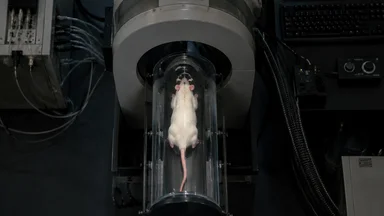
The cap applies to both functional MRI and PET studies in rodents. Before the policy, a typical rat fMRI experiment might budget US$1,800–2,200 per animal, depending on the length of scanning sessions, the number of sequences, and the cost of contrast agents. The new limit of US$1,500 forced investigators to either reduce the number of animals per group or cut scanning time per animal. Most chose the former.
In a survey of funded projects presented at a 2024 neuroscience meeting, three labs reported that their average group size dropped from 12–15 rats to 8–10 after the cap took effect. One lab, which had historically used 18 rats per condition for a longitudinal study of aging, had to settle for 13. The reduction is not uniform across all studies, but the trend is consistent: when the per-animal cost exceeds the cap, the number of animals is trimmed first.
The charity's stated rationale was to distribute limited funds across more research groups. By capping per-subject costs, the funder could support a larger number of projects without increasing its total budget. But the rule treats all imaging studies as if they have similar cost structures, ignoring the fact that some experiments require longer scan times, multiple sessions, or expensive probes.
As of late 2024, the cap had been applied to MRI and PET studies only, leaving other modalities like calcium imaging or electrophysiology unaffected. Some researchers have begun shifting their experimental designs toward those cheaper techniques, even when fMRI would be the more appropriate tool for the question at hand.
Consider a specific example from a lab at a midwestern university that had been studying the effects of early-life stress on hippocampal development. Their protocol involved three scanning sessions per animal—at postnatal day 30, day 60, and day 90—to track longitudinal changes. With scanner costs of roughly US$350 per session and additional costs for anesthesia and histology at each time point, the per-animal total reached approximately US$2,100. Under the cap, they could only afford two sessions per animal or had to reduce the number of animals from 14 to 10 per group. They chose to reduce the number of animals, but this halved their ability to detect small effect sizes, which are typical in developmental studies where individual variability is high.
How the Cap Clashed with Standard Power Calculations
A typical rodent fMRI study needs 8–15 animals per group to detect a moderate effect size (Cohen's d around 0.8) with 80% power at a significance threshold of 0.05. That range comes from decades of meta-analyses showing that blood-oxygen-level-dependent (BOLD) signal changes in rodents have high variance, often with coefficients of variation exceeding 40%.
When the cap forces group sizes down to 6–10 animals, power drops below 0.8 for small-to-moderate effects. For a study aiming to detect a 20% difference in BOLD response between a treatment and control group, a group of 8 yields power of roughly 0.65. That means the experiment has a one-in-three chance of missing a real effect.
Reviewers at journals such as Nature Neuroscience and Journal of Neuroscience have begun flagging underpowered rodent imaging studies more frequently. In a 2024 editorial, the editors of NeuroImage noted that the proportion of rodent fMRI submissions with sample sizes below 8 per group had increased by 15% over two years, and they urged authors to justify their sample sizes with explicit power calculations.
The cap does not forbid researchers from using larger cohorts if they can justify the cost. But in practice, grant budgets are tight, and exceeding the cap requires a written exception that is rarely granted. As one principal investigator put it at a funding workshop, “The message is clear: stay under the line, or don't apply.”
The impact is particularly acute for studies of subtle cognitive processes, such as decision-making or attention, where effect sizes are often small. For example, a lab studying the orbitofrontal cortex's role in reward-guided behavior might need 20 or more animals per group to detect a 15% difference in BOLD signal. Under the cap, such a study becomes essentially infeasible, pushing researchers toward simpler behavioral assays that lack the neural specificity of fMRI.
Worked Example: Anterior Cingulate Circuit Study
Consider a lab studying the anterior cingulate cortex's role in pain processing. The lab planned to use 20 rats per condition—sham, nerve injury, and drug treatment—for a total of 60 animals. The per-animal cost was estimated at US$1,800, including 45 minutes of 7T MRI time at US$400 per hour, anesthesia supplies, a contrast agent, and post-scan histology.
Under the cap, the lab could only budget US$1,500 per animal. The total imaging budget for the project was fixed, so the number of animals per group had to drop to 15. That reduction from 20 to 15 per group lowered the statistical power to detect a 25% signal change in the anterior cingulate from 0.85 to 0.72.
The lab responded by adding a behavioral proxy—paw withdrawal latency—to supplement the imaging data. The behavioral measure was cheaper (roughly US$50 per animal) and could be collected in a larger sample. But the behavioral test does not directly measure neural activity, and the correlation between behavior and BOLD signal in the anterior cingulate is only moderate (r ≈ 0.5). The lab now has two underpowered measures instead of one adequately powered measure.
This trade-off is common. Researchers are forced to choose between statistical rigor and methodological purity. Some have opted to pool data across multiple grants, but that introduces its own complications, as we will see.
Another example comes from a lab studying the amygdala's response to fear conditioning. Their protocol required 30-minute scanning sessions with a high-resolution anatomical scan and two functional runs, costing roughly US$500 per session per animal. With a target of 16 animals per group (conditioned, unconditioned, and control), the per-animal cost was US$1,700. Under the cap, they reduced to 12 per group, dropping power from 0.88 to 0.74 for detecting a moderate effect. They attempted to compensate by increasing the number of trials per session, but that introduced habituation effects that confounded the results.
Infrastructure Costs That Drove the Cap
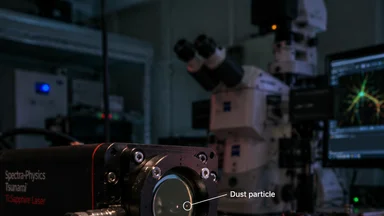
Why does rodent neuroimaging cost so much in the first place? A 7T small-bore MRI scanner rents for US$300–500 per hour, depending on the institution and whether the fee includes a technician. A typical functional scan session runs 45–60 minutes, plus 15 minutes for setup and calibration. That is roughly US$300–400 per session just for scanner time.
Anesthesia is another cost. Isoflurane, oxygen, and monitoring equipment add roughly US$50–100 per session. If the animal is imaged multiple times (as in longitudinal studies), the cost multiplies. Contrast agents, such as iron oxide nanoparticles for perfusion imaging, can cost US$100–200 per dose.
Post-scan histology adds more. Cryostat sectioning, antibody staining, and microscopy can run US$200–400 per brain. Personnel costs—a technician to run the scanner, a veterinarian to monitor anesthesia, and a graduate student to analyze data—are often folded into the per-animal overhead, which many institutions set at 40–50% of direct costs.
The cap assumed a 40% overhead rate, but actual rates at many research universities exceed 50%. That discrepancy means the cap is even tighter than it appears. A lab that pays 55% overhead effectively has only US$968 per animal for direct costs, not US$1,500.
Some labs have tried to negotiate lower scanner rates by using off-peak hours, but this often means scanning at night or on weekends, which can affect animal physiology and data quality. A lab at a west coast institution reported that their evening scanner rate was 30% lower, but the BOLD signal in rats scanned at midnight showed higher variability, likely due to circadian confounds.
Publication Pressure as an Unintended Amplifier
High-impact journals increasingly demand large sample sizes. A 2022 analysis of rodent fMRI papers in Nature Communications found that the median sample size per group was 12, and papers with fewer than 10 were more likely to be sent to revision with a request to add animals. That expectation collides with the funding cap.
Underpowered studies are rejected more often, but they also produce inflated effect sizes when they do get published. This is a well-known phenomenon in neuroscience: small samples yield noisy estimates, and only the noisiest ones cross the significance threshold. The result is a literature littered with effects that cannot be replicated.
Some labs have responded by pooling data across sites. A consortium of three labs might each contribute 8 rats per condition, yielding a total of 24. But pooling introduces batch effects—differences in scanner calibration, anesthesia protocols, and housing conditions that add variance and can obscure true signals. Statistical methods to correct for batch effects exist, but they require careful planning and often reduce effective sample size.
Other groups are switching to cheaper imaging modalities. Two-photon calcium imaging, for example, has lower per-animal costs (roughly US$500–800 per session, including the cost of the cranial window and the dye) and can be performed in awake, behaving animals. But calcium imaging measures a different signal—calcium influx in cell bodies and dendrites—not the hemodynamic response that fMRI captures. The two methods are complementary, not interchangeable.
As one researcher noted in a recent preprint, “The cap is pushing the field toward methods that are cheaper but not necessarily better suited to the question. That is a recipe for conceptual confusion.”
There is also a risk that the cap incentivizes p-hacking. With fewer animals, researchers might be tempted to analyze data in multiple ways until a significant result emerges. A 2023 survey of rodent neuroimaging studies found that those with sample sizes below 10 per group were twice as likely to report post-hoc subgroup analyses, a practice that inflates false-positive rates.
Three Mitigations Labs Are Testing
Researchers have begun experimenting with statistical and procedural workarounds. One approach is to pre-register an effect-size cutoff: instead of claiming to detect any effect, the lab specifies that it will only interpret effects above a certain threshold that the sample size can reliably detect. This reduces the risk of false positives but also narrows the scope of discovery.
A second strategy is hierarchical Bayesian shrinkage, which borrows strength across groups or across studies. By modeling the prior distribution of effect sizes, a Bayesian analysis can yield stable estimates even with small samples. But Bayesian methods require careful specification of priors, and reviewers are often skeptical of results that depend heavily on prior assumptions.
A third mitigation is sharing control data across labs. If multiple labs use the same sham or vehicle condition, they can pool control animals to increase power for comparisons. This requires standardized protocols and trust that the control data are comparable. Several consortium efforts are underway, but they are in early stages.
None of these mitigations fully restores the lost power. Pre-registration does not increase sample size; Bayesian shrinkage can reduce variance but cannot create information that was never collected; and shared controls require coordination that is still rare in the field.
A fourth approach that some labs are exploring is the use of within-subject designs, where each animal serves as its own control. This can reduce the number of animals needed by roughly 30–40% because the within-subject variance is typically lower than between-subject variance. However, within-subject designs are not feasible for all experiments—for example, studies of permanent lesions or developmental trajectories require separate groups. Moreover, repeated scanning can lead to habituation or stress effects that confound the results.
What the Cap Reveals About Research Incentives
The per-animal cost cap is a well-intentioned attempt to stretch limited funding across more projects. But it reveals a deeper tension in how research is incentivized. Funding bodies often prioritize equity—giving many labs a piece of the pie—over statistical power. The result is a system in which many studies are underpowered by design.
Single-subject caps ignore the variance structure of the data. A study of a highly variable trait, such as BOLD signal in the anterior cingulate, needs more animals than a study of a stable trait like brain volume. A flat cap treats all traits as equally variable, which is biologically naive.
Principal investigators bear the statistical risk. If a study fails to find a significant effect, the lab may struggle to publish, and the grant may not be renewed. The funder, having capped the cost, bears no responsibility for the resulting low power. The incentive for the PI is to cut corners—reduce scanning time, skip histology, or switch to a cheaper but less appropriate method.
The field may shift toward cheaper imaging modalities, as noted earlier. That could be a positive development if it forces researchers to think more carefully about which technique answers their question. But it could also lead to a fragmentation of evidence, where different labs use different methods for the same question and results become hard to compare.
Transparent cost reporting could help. If grant applications included a line item for statistical power, and if funders evaluated whether the proposed sample size could achieve that power given the budget, the trade-off would be explicit. Some funders are beginning to require power analyses at the grant stage, but the per-animal cap remains a blunt instrument that does not account for effect size or variance.
The cap is not going away. It is a response to real budget constraints. But the neuroscience community needs to acknowledge that the rule has a cost—in lost statistical power, in methodological drift, and in the reproducibility of findings. Until funders and researchers together design a more nuanced system, the quarter-sized cohort will remain the new normal.
One possible path forward is a tiered cap system, where studies with larger anticipated effect sizes or lower variance are allowed a lower per-animal budget, while studies with smaller effects or higher variance receive a higher cap. This would require researchers to provide explicit variance estimates at the grant stage, which is already good practice. Some funders have experimented with such tiered models for clinical trials, but they have not yet been applied to rodent neuroimaging.
Another idea is to fund core facilities that reduce per-animal costs through economies of scale. If multiple labs share a single scanner and a dedicated technician, the per-session cost can drop by 20–30%. A few institutions have established such cores, but they require substantial upfront investment and are not yet widespread.
Ultimately, the debate over the cap highlights a broader issue: the mismatch between the cost of rigorous science and the available funding. As one lab director put it, “We are trying to do 21st-century neuroscience with 20th-century budgets. Something has to give.”