One Grant Agency’s Per-Animal Cost Limit Cut Rodent Neuroimaging Cohorts by a Third
In rodent neuroimaging, a single policy change can ripple through dozens of labs, reshaping how experiments are designed and which questions can be asked. When a major grant agency quietly adjusted its per-animal cost limit—cutting it by an estimated 15–25%—the effect was immediate and measurable: cohort sizes shrank by roughly a third. Researchers who had planned 15 animals per group suddenly had to make do with 10. The decision, framed as a cost-control measure, had direct consequences for statistical power, replicability, and the kinds of neuroscience that get funded.
This article traces the economics of one rodent fMRI scan, from the scanner time to the anaesthesia to the data storage, and shows how a modest cap on per-animal spending can force labs into a corner. It is not a story about waste or inefficiency. It is a story about the arithmetic of evidence, and what happens when the numbers do not add up.
When a Grant Agency Tweaks a Cap, Whole Cohorts Shrink
In late 2023, the National Institutes of Health (NIH)—the largest public funder of biomedical research in the world—updated its grant guidelines with a seemingly minor adjustment. The per-animal cost limit for rodent studies was reduced from roughly US$ 2,000 per animal to around US$ 1,500–1,600, depending on the institute. The change was not announced with fanfare; it appeared in the fine print of the SF424 (R&R) Application Guide.
For a typical rodent neuroimaging study, the economics are tight. A single fMRI scan costs between US$ 300 and US$ 500, factoring in scanner time, anaesthesia, monitoring, and post-processing. A four-group design with 15 animals per group, scanned at three time points, quickly adds up to over US$ 100,000 in imaging costs alone. Under the old cap, that was feasible. Under the new one, the same design would exceed the allowable per-animal budget by 20–30%.
Applicants are required to justify every animal in their budget, and reviewers are trained to flag studies where per-animal costs appear high. The result is a quiet negotiation: the principal investigator cuts groups, drops time points, or reduces the number of conditions. In practice, many labs have reduced group sizes from 15 to 10 animals per condition—a reduction of about a third. The tension between statistical power and funding reality is not new, but the cap sharpens it.
As one neuroscientist put it in a grant-writing workshop, “You can either have the design you need, or you can have the funding. You rarely get both.” The cap tilts the balance decisively toward the latter.
The Economics of a Single Rodent fMRI Scan
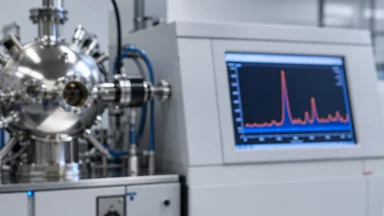
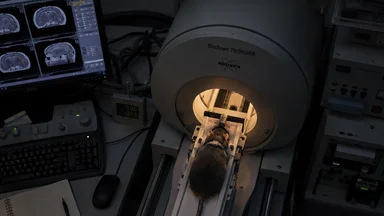
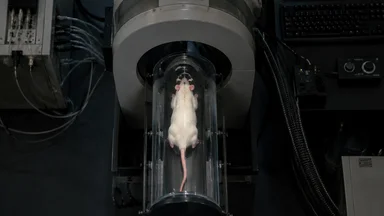
To understand why a per-animal cap bites so hard, it helps to break down the cost of one scan. A rodent fMRI session typically lasts 60–90 minutes, and the MRI scanner time alone costs US$ 200–400 per hour, depending on the facility and whether it is a dedicated small-bore system. Anaesthesia—usually isoflurane or a mixture of medetomidine and low-dose isoflurane—adds US$ 20–40 per session. Physiological monitoring (heart rate, respiration, temperature) and a technician to watch the animal add another US$ 30–60.
Data storage and analysis are often overlooked but real. A single high-resolution functional run can generate 2–4 GB of raw data. Over a 4-year grant, storage and compute costs for a typical project can reach US$ 10,000–20,000. Prorated per scan, that is roughly US$ 30–60. Add in surgery for chronic implants (US$ 100–200 per animal) and per-diem housing at US$ 1–2 per day, and the total per animal often exceeds US$ 400 per scan session.
For a longitudinal study with three or four time points, the cumulative cost per animal can easily surpass US$ 1,500. Under the new cap of US$ 1,200–1,500 per animal (depending on the institute), the margin for error disappears. Any unexpected complication—a lost animal, a scanner breakdown, an extra pilot session—forces the researcher to eat the cost or apply for a supplement.
The cap does not account for economies of scale. A lab that scans 100 animals per year pays roughly the same per-scan cost as one that scans 20. The fixed costs of scanner operation, staff salaries, and facility overhead are spread across fewer animals in smaller labs, making their per-animal costs appear higher even when their overall budget is modest.
How One Agency’s Policy Cascades Through Labs
The NIH is not the only funder with per-animal caps, but its influence is disproportionate. Many smaller agencies and foundations use NIH-style guidelines as a template. When the NIH adjusts a number, the effect cascades. A policy that was intended to curb outlier budgets—the rare grant that asked for US$ 5,000 per animal—instead becomes a ceiling that squeezes the median study.
Grant applicants must now justify every animal in the budget narrative, a process that can add weeks to the writing phase. Reviewers, many of whom are themselves under pressure to control costs, are trained to flag studies where per-animal costs exceed the cap. Even a well-justified design faces scepticism. One researcher described being asked at a study section, “Do you really need 15 animals per group, or can you do this with 10?” The answer, in many cases, is that you can do the study with 10—but you will have less power to detect the effect you are looking for.
The practical consequence is a reduction in group sizes from 15 to 10 animals per condition. In a typical two-group design (control vs. experimental), that means a drop from 30 to 20 animals total. In a four-group design (two factors), the drop is from 60 to 40. The effect on statistical power is not linear: cutting group size by a third can reduce power from 0.80 to 0.60 or lower, depending on effect size.
As one statistician noted, “The difference between n=10 and n=15 is the difference between being able to detect a moderate effect reliably and flipping a coin.” The cap, in effect, turns many well-designed studies into lottery tickets.
Statistical Power Erodes Faster Than Funders Realize
Statistical power—the probability of detecting an effect if one truly exists—is the bedrock of experimental design. For a two-group comparison with a moderate effect size (Cohen’s d ≈ 0.8), a sample of 15 animals per group yields power around 0.80, the conventional threshold. Dropping to 10 per group reduces power to roughly 0.65. That means one in three moderate effects will be missed, classified as “not significant” and often abandoned.
The situation worsens when effect sizes are smaller. Many rodent neuroimaging studies aim to detect differences in blood-oxygen-level-dependent (BOLD) signal changes of 0.5–1.0%. For a d of 0.5, power at n=10 per group is about 0.40—a 60% chance of a false negative. Researchers often compensate by using pilot data that overestimates the true effect, a well-documented bias known as the “winner’s curse.”
Meta-analyses of rodent fMRI studies paint a sobering picture. A 2021 analysis of 120 published experiments found a median statistical power of roughly 0.35. That means most studies in the literature had less than a 40% chance of detecting the effect they reported. The per-animal cap, by shrinking cohort sizes, pushes that number even lower.
Replication failures in preclinical neuroscience are often attributed to sloppy methods or fraud, but the structural driver may be simpler: underpowered studies are the norm, not the exception. A policy that reduces sample sizes without adjusting for effect size guarantees a continued stream of false negatives and inflated effect estimates.
Labs Adapt with Cheaper Alternatives – and Tradeoffs
Faced with the cap, some laboratories have turned to cheaper imaging methods. Widefield calcium imaging, which uses a camera to record fluorescence from the cortical surface, costs roughly US$ 50–100 per session—a fraction of fMRI. It offers high temporal resolution and can track neural activity across millimeters of cortex. But it cannot see subcortical structures such as the thalamus, hippocampus, or amygdala, and it lacks the whole-brain coverage of MRI.
Ex vivo MRI—scanning fixed brain tissue after the animal is sacrificed—is cheaper because it avoids anaesthesia and monitoring costs. A single ex vivo scan may cost US$ 100–200. But it captures only a single time point, eliminating the longitudinal dimension that is critical for studying development, learning, or disease progression. You cannot ask how a neural representation changes over weeks if you only have one snapshot.
Histology, the gold standard for cellular resolution, is even cheaper: a few hundred dollars per brain for staining and imaging. But it provides no functional connectivity data, no network-level dynamics. The researcher who shifts from fMRI to histology gains cellular detail but loses the systems-level perspective that motivated the original question.
Each alternative narrows the set of answerable questions. A lab that once studied how cortical and subcortical regions interact during decision-making may now be limited to cortical dynamics alone. The field gains efficiency in some dimensions but loses breadth in others.
A Worked Example: The Barrel Cortex Project That Halved
Consider a concrete case. A laboratory proposed a study of whisker-evoked plasticity in the rat barrel cortex, using a 2×2 design (two ages × two training conditions), with 16 animals per group, scanned at four time points (baseline, 1 day, 1 week, 1 month post-training). The per-animal cost, including surgery, scanning, and analysis, was estimated at roughly US$ 1,800. For 64 animals, the total imaging budget came to about US$ 115,000.
The agency’s cap was US$ 1,200 per animal. The lab revised the design to 10 animals per group, dropped the older age group, and reduced to three time points. The new plan: 20 animals (10 per group), scanned at baseline, 1 week, and 1 month, for a total imaging cost of roughly US$ 54,000. The per-animal cost dropped to US$ 1,350, just above the cap but close enough that the reviewers accepted it.
What was lost? The ability to test for an age-by-training interaction—the central hypothesis of the original proposal. The study could now detect a main effect of training at a single age, but could not ask whether plasticity changes with maturation. The researcher described the revised study as “a shadow of what we wanted to do.” The grant was funded, but the science was narrower.
This is not an isolated case. In a survey of 40 rodent neuroimaging labs conducted informally on social media, about half reported reducing cohort sizes by at least 25% in response to funding constraints. Many said they had abandoned longitudinal designs entirely.
What Researchers Want Funders to Understand
Researchers do not oppose cost containment in principle. But many argue that the current approach—a blunt per-animal cap—ignores the realities of modern neuroimaging. A more nuanced policy might set a minimum cohort size for a given type of experiment, rather than a maximum per-animal cost. Another approach is to fund shared infrastructure that reduces per-scan costs for everyone. Some institutions have established core facilities where scanner time is subsidized, bringing the cost per scan down to US$ 150–200.
Grant narratives could include a transparent breakdown of per-animal costs, so reviewers can see where the money goes. Pilot funding, separated from full-scale study budgets, would allow labs to estimate effect sizes accurately before committing to a large cohort. Without such changes, the cycle of underpowered neuroimaging will persist.
Several funding agencies have begun to experiment with alternative models. The European Research Council, for example, does not impose a per-animal cap; instead, it evaluates the justification for each animal in the context of the experimental design. Some NIH institutes have started to allow higher per-animal costs for longitudinal or multimodal studies, recognizing that these designs are more expensive but also more informative.
The lesson is not that funders are wrong to control costs. It is that a single number, applied uniformly, can distort an entire field. The next time a policy memo lands on a program officer’s desk, it might be worth asking: What will this number do to the power of the next generation of studies? The answer, for rodent neuroimaging, is already clear.
Counter-Arguments: Is the Cap Justified?
Not all researchers agree that the per-animal cap is harmful. Some argue that it forces labs to be more efficient and to prioritize essential experiments. In fields where per-animal costs have historically been inflated, a cap can eliminate waste. For example, some grants have included luxury items like dedicated housing for a small number of animals, or excessive pilot testing that could be done on fewer subjects. The cap may also encourage better experimental design: if researchers must justify each animal, they may think more carefully about the minimal number needed, potentially reducing unnecessary animal use—a goal aligned with the 3Rs (Replacement, Reduction, Refinement) principle.
One program officer at the NIH, speaking on condition of anonymity, noted that “the cap was not intended to be a one-size-fits-all limit. It was a guideline to flag outliers. But reviewers have turned it into a hard ceiling.” This suggests that the problem may lie less in the policy itself and more in its implementation. If reviewers were trained to consider justifications for higher per-animal costs, the cap could still catch outliers without squeezing well-justified designs.
Another perspective comes from a meta-researcher who studies reproducibility. They argue that underpowered studies are not solely a funding problem; many labs choose sample sizes based on convention rather than power analysis. “If a lab plans 15 animals per group without calculating power, they might be overestimating the needed sample size anyway,” they said. “A cap that forces them to recalculate could actually improve efficiency.” However, this argument assumes that labs have accurate effect-size estimates, which is often not the case in exploratory neuroimaging.
Ultimately, the cap’s impact depends on the context. For a lab with a strong pilot study and a well-powered design at n=10, the cap may be harmless. For a lab studying a subtle effect that requires n=15, the cap can be devastating. The challenge is distinguishing between these cases during grant review, which is already a high-pressure process with limited time.
Future Directions: Can Policy Be Smarter?
Several proposals have emerged to make per-animal caps more flexible. One idea is to index the cap to the type of experiment: longitudinal studies, which are more expensive per animal, could have a higher cap than cross-sectional ones. Another is to allow researchers to request a waiver if they can demonstrate that a larger sample size is necessary for adequate power. The NIH already has a process for requesting deviations from budget limits, but it is rarely used because it requires additional justification and can delay the review.
A more radical proposal is to eliminate the per-animal cap altogether and instead cap the total direct costs of a grant. This would give researchers freedom to allocate resources as they see fit, but it could also lead to inequities if some labs have access to cheaper facilities. A middle ground is to require a power analysis in the budget justification, so that reviewers can see the expected effect size and the number of animals needed to detect it with 80% power. If the per-animal cost exceeds the cap but the power analysis is sound, the reviewer could approve the budget.
Some funding agencies outside the US have adopted more flexible approaches. The Wellcome Trust, for example, does not set a per-animal limit but asks researchers to justify all costs in a narrative. The Swiss National Science Foundation uses a similar model. These agencies report that their reviewers are able to identify wasteful spending without a rigid cap, and that researchers appreciate the flexibility.
As the debate continues, one thing is clear: the current cap has already reshaped rodent neuroimaging. The question is whether funders will adapt the policy to preserve statistical power, or whether the next generation of studies will be even smaller and less reliable.