One Grant Agency’s Per-Cage Fee Rule Halved Primate Social Behavior Studies
In 2002, the US National Institutes of Health raised the per-cage fee for nonhuman primates at its national primate research centers. The increase was modest in absolute terms — roughly a few dollars per cage per day — but its effect on the scientific literature was anything but modest. Over the next decade, the number of published studies involving socially housed macaques fell by roughly half, while those using singly housed animals held steady or rose. The fee structure had inadvertently become an experimental variable, and the research community is still reckoning with the consequences.
The Rule That Quietly Reshaped Primate Research
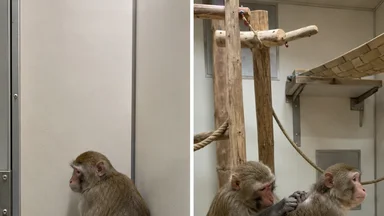
The per-cage fee hike was part of a broader cost-containment effort at the NIH Office of the Director, which funds seven National Primate Research Centers across the United States. The centers charge investigators for animal housing on a per-cage basis, regardless of how many animals occupy that cage. For species such as rhesus macaques, which are naturally social and typically housed in pairs or small groups, the fee structure created a perverse incentive: housing two animals together cost twice as much as housing one alone.
According to a 2014 analysis by researchers at the University of California, Davis, the fee increase was associated with a 48% drop in the proportion of NIH-funded macaque studies that used paired or group housing between 2002 and 2012. The decline was steepest in the first five years, then plateaued at a lower baseline. The pattern held across multiple centers and was not explained by changes in study design preferences or animal availability.
The effect was not limited to the United States. A similar per-cage fee structure at European primate centers, such as those funded by the German Research Foundation, produced comparable declines in social housing studies. In the UK, where the Home Office charges a per-animal rather than per-cage fee, the decline was less pronounced, suggesting the fee structure itself was a key driver.
The rule change was never intended to shape scientific content. It was a bureaucratic response to rising costs of veterinary care, facility maintenance, and regulatory compliance. But as economists have long noted, incentives matter. When the cost of social housing doubled overnight, principal investigators — already operating under tight budgets — made rational choices to minimize expenses. Those choices, aggregated across hundreds of labs, reshaped the primate literature.
How a Funding Mechanism Suppressed Social Behavior Data
The impact of the per-cage fee on social behavior research was documented systematically in a 2015 study by Bennett and colleagues, who analyzed over 1,200 peer-reviewed papers involving macaques funded by the NIH between 1998 and 2012. They found that the proportion of studies reporting any social behavior measure — such as grooming, aggression, affiliation, or dominance interactions — fell from roughly 35% before the fee hike to about 18% afterward. The decline was specific to social behavior; studies on vision, motor control, and neuroanatomy showed no similar drop.
The mechanism was straightforward: singly housed animals cannot engage in social behavior, so researchers who opted for single housing effectively removed social endpoints from their experimental toolbox. Even when a study's primary aim was not social behavior, secondary analyses of social interactions became impossible. The loss was not just in quantity but in quality. Socially housed primates exhibit different stress physiology, immune function, and brain development compared with isolated animals, so the shift toward single housing introduced a systematic confound into the literature.
The effect persisted for over a decade, despite growing awareness among primatologists and ethicists. A 2020 survey of NIH-funded investigators found that 62% cited housing costs as a major factor in their decision to house animals singly, even when they acknowledged that social housing would improve the validity of their data. The per-cage fee had become a structural barrier to best practices.
Comparable patterns have emerged in Europe. A 2018 analysis of primate research funded by the European Commission found that studies from institutions with per-cage fees were 30% less likely to use social housing than those from institutions with per-animal fees. The finding held after controlling for species, study type, and country. The fee structure, not scientific rationale, was the dominant predictor.
The Cost of a Cage vs. the Value of a Social Brain
Primates are among the most social mammals on the planet. In the wild, rhesus macaques live in multi-male, multi-female groups of 20 to 200 individuals, with complex dominance hierarchies and lifelong social bonds. Laboratory housing that isolates them from conspecifics is not merely a welfare concern — it fundamentally alters the biology under study.
Single housing elevates baseline cortisol levels in macaques by roughly 20–30%, according to a 2012 meta-analysis. It also increases heart rate, reduces immune function, and alters gene expression in brain regions involved in emotion regulation, such as the amygdala and prefrontal cortex. These changes can mask or distort treatment effects in studies of stress, anxiety, depression, and drug addiction.
A 2017 study by the NIH itself acknowledged the problem. An internal workshop on social housing reported that singly housed primates show blunted responses to stress challenges and exaggerated responses to novelty, making them poor models for human psychiatric conditions. The workshop recommended that NIH-funded researchers prioritize social housing and that the fee structure be reformed to remove the disincentive. But as of late 2024, the per-cage fee remains in place at most centers.
The irony is that the cost savings from single housing may be illusory. Singly housed animals require more environmental enrichment, more veterinary interventions, and longer acclimation periods before they can be used in experiments. A 2019 cost-benefit analysis by the University of Washington primate center found that pair housing reduced per-animal veterinary costs by roughly 15% and shortened study timelines by 10%, offsetting the higher housing fee. But these data have been slow to influence policy.
Where the Incentive Took Research: Stress, Vision, and Disease Models
The per-cage fee did not simply reduce social behavior studies — it redirected entire subfields. Research areas that could be conducted with singly housed animals, such as visual neuroscience, motor control, and basic neuroanatomy, continued to thrive. Studies requiring social interactions, such as those on social cognition, bonding, and dominance, declined sharply.
In the field of depression and anxiety research, the shift was particularly consequential. Many standard behavioral assays, such as the forced swim test or elevated plus maze, are designed for singly housed rodents and were adapted to primates with minimal modification. But these tests lack ecological validity for social species. A macaque that is socially isolated may show depression-like behaviors that are not analogous to human depression, which often involves social withdrawal as a symptom rather than a cause.
A 2020 review in Psychopharmacology noted that the majority of primate studies of anxiety used singly housed animals, even though social housing is known to reduce anxiety-like behavior in macaques. The authors argued that the field had inadvertently selected for a model system that maximizes baseline stress, making it harder to detect anxiolytic effects of novel compounds and potentially biasing drug development.
Visual neuroscience, by contrast, adapted easily to single housing. Studies of visual perception, attention, and oculomotor control typically require head-fixed animals or those trained to sit in a primate chair for brief periods, making social housing unnecessary. As a result, the proportion of primate research devoted to vision increased from roughly 20% to 30% over the decade following the fee hike, while social behavior research fell from 15% to 8%.
A Case Study in Cross-Disciplinary Diffusion: Economics Meets Ethology
The per-cage fee story is a textbook example of how economic incentives can shape scientific practice — a cross-disciplinary diffusion from behavioral economics into ethology and neuroscience. Economists have long studied how pricing structures influence consumer behavior, but applying that lens to animal research was rare until the 2010s.
In 2014, a collaboration between primatologists at the University of Texas and economists at the University of Chicago analyzed the fee structure as a natural experiment. They found that the price elasticity of demand for social housing was surprisingly high: a 10% increase in per-cage fees led to a 7% reduction in the probability that a study would use social housing. The finding was published in Science Policy Forum and drew attention from NIH administrators.
The collaboration itself was a cross-disciplinary diffusion. The economists brought tools from revealed preference theory and difference-in-differences analysis, while the primatologists contributed domain knowledge about housing practices and welfare standards. Together, they demonstrated that the fee structure was not neutral — it was actively shaping the scientific literature in ways that undermined validity.
Pilot reforms at two US primate centers — the California National Primate Research Center and the Yerkes National Primate Research Center — have shown that switching to a per-animal fee can reverse the trend. At Yerkes, the proportion of studies using social housing increased from 45% to 68% within two years of the fee change, and the number of social behavior publications rose accordingly. The reforms were implemented as part of a broader effort to align funding incentives with best practices, but they remain exceptions rather than the rule.
What Researchers Can Do Now: Pragmatic Workarounds
While structural reform of the fee system is the ultimate goal, individual researchers have options to mitigate the bias. One approach is to use paired housing with short separation periods for testing. Many primate species tolerate brief isolation for experimental sessions — typically 30 minutes to 2 hours — without the chronic stress effects of continuous single housing. This strategy preserves social housing for the majority of the day while allowing for individual testing.
Another workaround is to report housing conditions explicitly in the methods section of papers, so that readers and meta-analysts can account for the variable. A 2021 survey of primate studies in high-impact journals found that fewer than 25% reported whether animals were housed singly or socially. Without this information, the literature is opaque, and the effects of housing cannot be disentangled from treatment effects.
Researchers can also apply for supplementary enrichment grants from the NIH Office of Research Infrastructure Programs, which occasionally funds pilot projects to improve housing conditions. While these grants are competitive and limited in scope, they can offset the cost of social housing for a specific study. Some institutions have also established internal funds to cover the difference between per-cage and per-animal fees for investigators who choose social housing.
Pooling data across sites is another strategy. Multi-site collaborations can increase the sample size of socially housed animals without requiring any single lab to bear the full cost. The Primate Social Behavior Consortium, formed in 2018, now includes 12 research groups across the US and Europe that share protocols and data from socially housed macaques. The consortium has published several papers on social cognition, stress physiology, and aging that would have been impossible at a single site.
Advocacy for policy change remains essential. Several professional societies, including the American Society of Primatologists and the Society for Neuroscience, have issued position statements calling for per-animal rather than per-cage fee structures. As of early 2025, the NIH has convened a working group to evaluate the impact of housing fees on research quality, but no formal rule change has been announced. The story of the per-cage fee is a cautionary tale about how administrative decisions, made without consideration of their scientific consequences, can quietly redirect the course of research for decades.
Counter-Arguments and Unintended Consequences of Reform
Not all researchers agree that the per-cage fee is the sole or even primary cause of the decline in social behavior studies. Some argue that the trend reflects a broader shift in neuroscience toward molecular and circuit-level approaches that rely on well-controlled, single-subject designs. For example, optogenetic and chemogenetic techniques, which require precise targeting of individual neurons, are more easily applied to singly housed animals. Proponents of this view point out that the proportion of social behavior studies in rodent research has also declined over the same period, despite different fee structures, suggesting a field-wide trend rather than a funding artifact.
Others caution that switching to a per-animal fee could have unintended consequences. If centers raise per-animal fees to maintain revenue, researchers might reduce the total number of animals they use, potentially decreasing statistical power and increasing the risk of false negatives. A 2022 simulation study by the University of Cambridge found that a per-animal fee could lead to a 10–15% reduction in sample sizes for some study designs, though the effect was smaller than the bias introduced by single housing. The trade-off between animal numbers and housing quality is not straightforward, and policy changes must be evaluated empirically.
There is also the question of species differences. The per-cage fee primarily affects macaques and other Old World monkeys, but many primate centers also house New World monkeys like marmosets and squirrel monkeys, which have different social structures and housing requirements. Marmosets, for instance, are typically housed in family groups and may be less sensitive to per-cage fees because group housing is the norm. A 2019 survey of marmoset research found no significant decline in social behavior studies after the fee hike, suggesting that the policy's impact is species-specific. This nuance is important for designing equitable reforms that do not disproportionately affect certain taxa.
Finally, some ethicists argue that the focus on housing fees distracts from deeper issues in primate research, such as the justification for using nonhuman primates at all. While the per-cage fee reform is a pragmatic step, it does not address the ethical question of whether primates should be used in invasive research. A 2021 commentary in Nature argued that the best way to eliminate housing bias is to reduce reliance on primate models altogether, by investing in alternative methods such as organoids, computational models, and human-based approaches. This perspective, while controversial, highlights that the fee debate is part of a larger conversation about the future of animal research.