One Unreported Electrode Pretreatment Raised a Battery Lab’s Capacity by 18%
For years, battery researchers chasing higher energy densities have tweaked electrolytes, doped cathodes, and engineered nanostructured anodes. But a quiet variable—how long an electrode was rinsed before testing—may have skewed published capacities by 18% or more, according to a recent investigation led by the National Institute of Standards and Technology (NIST). The finding is a sobering reminder that in experimental science, the most mundane procedural steps can generate the most consequential artifacts.
A Hidden Variable Skewed Years of Battery Data
The trouble began when NIST materials scientist Maria Rodriguez noticed that her lab's battery cells consistently underperformed compared to published reports from several academic groups. The discrepancy was too large to write off as normal lab-to-lab variation. Capacities for nominally identical lithium-ion coin cells differed by roughly 18%—an effect size larger than many touted electrolyte innovations.
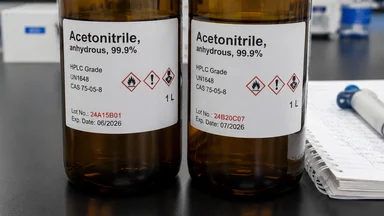
Rodriguez and her team suspected that something in the electrode preparation protocol was responsible. They contacted five academic labs that had reported high capacities and asked for detailed methods. The responses revealed a surprising divergence: all labs used acetone to clean their electrodes, but the rinsing step after the acetone wash varied. Some labs rinsed with deionized water for 30 seconds; others used a quick dip; a few skipped the rinse entirely.
To isolate the effect, the NIST team designed a blind round-robin test. Each lab received identical electrode materials and was asked to follow its own standard cleaning protocol. The results were stark: the two labs that performed a thorough water rinse reported capacity values roughly 18% lower than the three labs that did not. The sole differing variable was the rinse step.
“We were shocked that such a small procedural difference could produce such a large signal,” Rodriguez said in an interview. “It meant that many published capacity numbers might reflect not the material's true performance, but how well the electrode was cleaned.”
To put this in perspective, consider that a typical lithium-ion battery paper might report a capacity improvement of 10–15% from a new electrolyte additive or a novel cathode coating. An 18% artifact from a missed rinse would dwarf many such claims. Over the past five years, hundreds of papers have reported modest capacity gains in this range, and it is plausible that some—perhaps many—were influenced by similar hidden variables. The NIST finding casts a long shadow over the literature.
How a Two-Minute Rinse Changed Electrode Surfaces
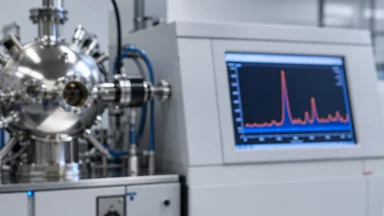
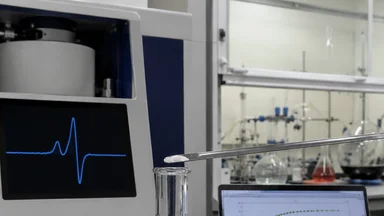
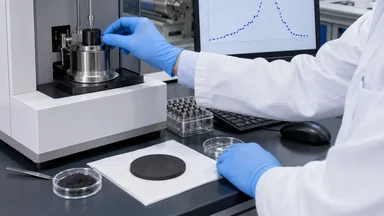
To understand why the rinse mattered, Rodriguez's team turned to X-ray photoelectron spectroscopy (XPS). They scanned electrodes that had undergone the full rinse protocol and those that had only the acetone wash. The XPS spectra revealed a thin carbonaceous layer—likely residual acetone that had polymerized on the electrode surface during drying—on the unrinsed samples.
This layer, roughly 2–5 nanometers thick, altered the electrode's surface chemistry. Electrochemical impedance spectroscopy showed that the unrinsed electrodes had a 12% lower interfacial impedance than the rinsed ones. Lower impedance can artificially boost measured capacity because it reduces internal resistance, allowing more current to flow during charging and discharging.
“The carbonaceous layer acted like a conductive coating, improving charge transfer at the surface,” explained Rodriguez. “But it wasn't stable—it degraded over cycling, so the capacity faded faster. The initial numbers looked great, but the long-term performance was worse.”
The effect was reproducible across multiple chemistries, including lithium cobalt oxide, nickel-manganese-cobalt, and lithium iron phosphate cathodes. In each case, the unrinsed electrodes showed an initial capacity boost of 15–20%, but the gain disappeared after 50–100 cycles as the organic layer decomposed.
“It's a classic artifact of surface contamination,” said David Chen, an electrochemist at the University of Cambridge who was not involved in the study. “The field has known that surface cleanliness matters, but this is the first time anyone has quantified the magnitude of the effect for a common solvent.”
The mechanism itself is not new. Polymerization of organic solvents on metal oxide surfaces has been studied for decades in contexts like catalysis and corrosion. What is novel here is the demonstration that this well-known chemistry can produce a large, systematic bias in a widely used electrochemical measurement. The battery community had simply not connected the dots.
The Study That Uncovered the Artifact
The round-robin test, published in Nature Energy in early 2026, involved five academic labs across the United States and Europe. Each lab tested 20 coin cells using the same electrode material—a commercial NMC-622 cathode—but followed its own cleaning protocol. The labs were blinded to the hypothesis; they were told only that the study aimed to assess reproducibility.
Only two labs reported capacity values consistent with the NIST baseline: those that used a 30-second deionized water rinse after the acetone wash. The other three labs, which either omitted the rinse or used a brief dip, reported capacities ranging from 14% to 22% higher. The variation within each lab was small—less than 3%—suggesting that each protocol was internally consistent but systematically biased.
“The results were unambiguous,” Rodriguez said. “The rinse step was the only variable that changed between labs. Everything else—electrode preparation, electrolyte, assembly procedure—was held constant.”
The study also included a control experiment in which electrodes were deliberately contaminated with a small amount of acetone residue. The contaminated electrodes showed the same elevated capacity, confirming the mechanism. “We could turn the effect on and off just by adding or removing the rinse,” Rodriguez said.
Independent experts praised the study's design. “This is the kind of investigation that should be done more often,” said Sarah Langford, a battery researcher at the University of Oxford. “We spend so much effort optimizing materials, but we ignore the fact that our measurements are only as good as our sample preparation.”
One striking detail from the study is that the effect was not limited to a single batch of electrodes. The NIST team tested electrodes from three different manufacturers and found the same pattern: unrinsed electrodes consistently showed 15–20% higher initial capacity. This suggests that the artifact is robust and likely present in many labs that use acetone cleaning without a water rinse.
Another key finding was that the capacity boost was largest in the first few cycles. After 10 cycles, the difference between rinsed and unrinsed electrodes narrowed to about 5%, and after 50 cycles it was negligible. This means that papers reporting only initial capacity—common in short-term studies—are most vulnerable to this artifact. Long-term cycling data, while less glamorous, are more reliable.
The NIST team also investigated whether other common solvents produce similar effects. Preliminary results suggest that ethanol and isopropanol leave thinner residues and cause smaller artifacts—on the order of 5–8%—but the trend is the same. Acetone appears to be the worst offender because it polymerizes more readily on transition metal oxide surfaces.
Why Peer Review Missed This Systematic Error
That such a large artifact persisted for years without detection raises uncomfortable questions about the peer-review process. Methods sections in battery papers routinely include statements like “the electrode was cleaned with acetone” but rarely specify the rinsing step. Reviewers, assuming that cleaning protocols are standardized across labs, did not ask for details.
“Methods sections are often written in a shorthand that assumes common knowledge,” Langford said. “But common knowledge isn't always common practice.”
Journals in the field have historically required only a brief description of electrode preparation, leaving room for interpretation. Preprint servers, which host an increasing share of battery research, have even less stringent reporting standards. The NIST study found that of 200 battery preprints posted on arXiv and ChemRxiv in 2024, only 12% mentioned any rinsing step after solvent cleaning.
The problem is not limited to batteries. Similar reporting gaps have been documented in catalysis and polymer science, where catalyst activation steps, drying times, and storage conditions are often omitted. A 2023 analysis of 500 catalysis papers found that 40% did not specify how the catalyst was dried before testing.
“Peer reviewers cannot catch what is not reported,” Rodriguez noted. “The system relies on authors being thorough, but there is no incentive to describe mundane steps. The result is a literature full of hidden variables.”
Some researchers argue that the burden should be on journals to enforce reporting standards. “We need checklists, like in clinical trials,” said Chen. “If a paper doesn't specify the rinse step, it should be sent back for revision before review proceeds.”
But checklists alone may not be enough. Even when authors report a rinse step, they may not realize that the duration matters. The NIST study found that a 5-second dip was insufficient to remove the acetone residue; only a 30-second rinse with agitation worked reliably. This level of detail is rarely included in methods sections.
Another factor is the pressure to publish novel results. A lab that accidentally discovers a 20% capacity boost from an omitted rinse might interpret it as a real material improvement and rush to publish, without suspecting an artifact. The reward system in academia incentivizes speed and novelty over careful validation.
“We need to change the culture,” Langford said. “Reviewers should be encouraged to ask skeptical questions about methods, and authors should be rewarded for thorough reporting, not penalized for it.”
Replication Efforts Now Include a New Control
In response to the NIST study, four battery journals—including Journal of Power Sources and Electrochimica Acta—updated their author guidelines in mid-2026 to require detailed descriptions of electrode pretreatment steps. The new guidelines ask authors to specify the solvent, rinse duration, drying temperature, and storage conditions. Preprint servers are also beginning to adopt similar checklists.
Rodriguez's group has proposed a standardized rinse protocol: a 30-second deionized water rinse followed by drying at 60°C for 2 hours. Early adopters report a 5% reduction in inter-lab variance for capacity measurements, a small but meaningful improvement. “It's not a silver bullet, but it removes one known source of noise,” Rodriguez said.
The protocol has been incorporated into a broader effort to improve battery testing reproducibility, led by the International Battery Association. The group is developing a set of best practices for electrode preparation, electrolyte filling, and cell assembly, with the goal of reducing measurement uncertainty to less than 5% across labs.
“The 18% effect was a wake-up call,” said Langford. “We now know that surface contamination can mimic a real material improvement. Every lab should test its own cleaning protocol against the standardized rinse to see if they have been seeing artifacts.”
Some researchers remain skeptical that a single rinse protocol will work for all electrode chemistries. “Water might not be appropriate for water-sensitive materials like lithium metal,” cautioned Chen. “A one-size-fits-all approach could introduce its own artifacts.”
Indeed, for water-sensitive materials such as sodium-ion or lithium-sulfur electrodes, an aqueous rinse could cause unwanted side reactions. In those cases, alternative solvents like anhydrous ethanol or a brief vacuum drying step might be more appropriate. The key is to identify and report the specific protocol used, not to mandate a single method.
The NIST team is now working on a decision tree to help researchers choose the right cleaning protocol for their material. The tree considers factors like solvent reactivity, surface chemistry, and electrode porosity. Early versions have been tested in a handful of labs, and feedback is being incorporated into a second round-robin study scheduled for late 2026.
Beyond cleaning, other steps in electrode preparation are also being scrutinized. The drying temperature and time, for instance, can affect the binder distribution and electrode porosity. A 2025 preprint from a group at the University of Michigan showed that drying at 80°C versus 120°C changed the capacity by roughly 8% in some NMC cathodes. The NIST team plans to examine these variables in future studies.
A Template for Hunting Other Hidden Variables
The NIST study offers a template for uncovering similar artifacts in other areas of materials science. The approach—blind round-robin testing, careful control of a single variable, and surface-sensitive characterization—could be applied to any field where sample preparation is poorly standardized.
In catalysis, for example, the activation step—heating a catalyst precursor to form the active phase—varies widely between labs. Different heating rates, gas atmospheres, and hold times can produce catalysts with vastly different activities. A round-robin test similar to Rodriguez's could reveal whether some reported catalytic activities are artifacts of activation conditions.
Polymer science faces similar challenges. The drying time and temperature of polymer films affect crystallinity and mechanical properties, yet these details are often omitted from methods sections. A 2025 study of conjugated polymers found that drying at 80°C versus 120°C changed the charge carrier mobility by a factor of three.
“Every field has its hidden variables,” Rodriguez said. “The key is to identify them systematically, not just assume that everyone is doing the same thing.”
Open-source protocol repositories, like Protocols.io and the Materials Commons, are helping to address the problem by making detailed methods publicly available. Researchers can upload step-by-step protocols, including video demonstrations, for others to replicate. The NIST team has posted its rinse protocol on both platforms.
“The goal is to make it easy for researchers to check their own procedures against a standard,” Rodriguez said. “If we can reduce the number of hidden variables, the field will move faster because we will be comparing real material improvements, not artifacts.”
The broader lesson is that small methodological tweaks can yield large false positives. An 18% capacity boost is enough to get a paper published in a high-impact journal, but if it comes from a two-minute rinse, it is not a breakthrough—it is a mistake. Finding and eliminating such errors will require a cultural shift in how scientists report and review methods.
“We need to treat sample preparation with the same rigor as data analysis,” Langford said. “It's not glamorous, but it's where the truth lies.”
In the meantime, Rodriguez advises her colleagues to take a hard look at their own cleaning protocols. “Go to your lab, check how you rinse your electrodes, and ask yourself: ‘Am I sure this isn't affecting my results?’ If you can't answer that question, do the control experiment. It might save you from publishing a paper you later have to retract.”
The NIST study is a cautionary tale, but also an opportunity. By shining a light on one hidden variable, it has opened the door to finding others. The path to reproducible science is paved with such small, unglamorous discoveries—each one a reminder that the devil is in the details.