Thailand Visa Exemptions Deny Overland Crossings Despite Airport Arrival Ease
Thailand is one of Southeast Asia's most visited countries, and its visa exemption policy—allowing passport holders from roughly 60 nations to enter without a visa for stays of up to 30 days—is a major draw. But there is a catch that catches thousands of travellers every year: the exemption applies only at international airports and a handful of seaports. Overland crossings, the kind used by budget travellers moving between Thailand and Laos or Cambodia, are largely excluded. The same passport that sails through Suvarnabhumi Airport can be refused at the Chong Mek border post in Ubon Ratchathani. Most guidebooks and travel blogs gloss over this distinction, leaving overlanders to discover the rule the hard way.
The split is not new. Thailand's land entry policy has remained essentially unchanged since 2016, when the government tightened visa-free access at border checkpoints to curb overstays and undocumented labour. Yet the information gap persists. Embassy websites list exemptions by nationality but bury the air-only clause in footnotes. The Ministry of Foreign Affairs publishes a PDF that mentions land-entry restrictions only in a dense table. And the official e-Visa page, which handles applications for those who need a visa in advance, states plainly that visa exemptions are valid only at airports and certain seaports—a detail many travellers miss until they are standing at a border gate.
This article examines the airport-only exemption trap, why land borders stay closed to visa-free entry, and what paperwork mistakes routinely derail overland trips. It draws on official sources, traveller reports from forums, and the author's own encounters at the Nong Khai border. The aim is not to discourage overland travel but to equip readers with the facts that conventional coverage leaves out.
The Airport-Only Exemption Trap
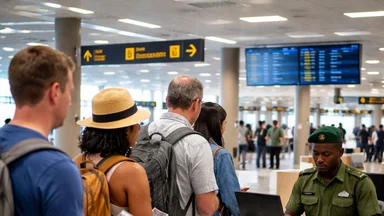
Thailand offers visa exemptions at 91 international airports, including all major hubs such as Suvarnabhumi, Don Mueang, Phuket, Chiang Mai, and Krabi. Passport holders from eligible countries—the United States, the United Kingdom, most of Europe, Australia, Japan, and several others—can walk through immigration without a visa, receive a 30-day stamp, and be on their way. The process takes minutes. No forms to fill in advance, no fee, no interview. It is one of the most generous visa policies in the region, and it works flawlessly—provided you arrive by air.
The problem begins when the same traveller tries to enter Thailand by land. At the Chong Mek checkpoint on the Thai-Cambodia border, for example, a US passport holder who assumed the exemption applied was turned back and told to apply for a visa at the nearest Thai embassy. Similar stories surface from the Mae Sai border with Myanmar, the Padang Besar crossing from Malaysia, and the Friendship Bridge at Nong Khai. In each case, the traveller had read online that Thailand was visa-free for their nationality and had no reason to suspect the rule changed based on mode of arrival.
Conventional travel coverage rarely mentions the split. A search of major travel sites turns up dozens of articles titled something like "Thailand Visa-Free Countries" or "How to Enter Thailand Without a Visa," nearly all of which omit the airport-only restriction. The fine print, if it appears at all, is buried in a FAQ at the bottom of the page. The result is that overlanders—backpackers on a bus from Vientiane, cyclists crossing from Cambodia, families driving from Malaysia—are disproportionately affected. They arrive expecting a smooth entry and instead face a choice: pay for a visa on arrival (if eligible) or turn back.
To be fair, the Thai government does publish this information. The embassy website for the United States includes a line that reads, "Visa exemption is available for nationals of [listed countries] traveling by air." The MFA's PDF on visa regulations contains a column titled "Means of Transport" that specifies "airport" for exempted nationalities. But these sources are not written for the casual traveller. They are legal documents, dense with legalese, and they are rarely linked from the pages where travellers actually look for entry requirements.
Why Land Borders Stay Closed to Exemptions
Thailand's decision to exclude overland crossings from the visa exemption scheme is rooted in bilateral agreements and domestic policy. Most of Thailand's land borders are covered by bilateral treaties with neighbouring countries that predate the current exemption list. These treaties often specify that visa-free travel applies only to air arrivals, or they require a pre-approved visa for overland entry. Renegotiating each treaty would be a diplomatic undertaking, and Thailand has shown little appetite for it.
Domestically, the restriction is a tool for immigration control. Land borders are more porous than airports. They handle a mix of tourists, day-trippers, migrant workers, and informal traders, making it harder for immigration officers to verify the purpose of travel. By limiting visa exemptions to airports, the government reduces the risk of overstays and illegal employment—a concern that has grown since 2014, when the military government began cracking down on undocumented foreigners. The policy also discourages repeated "visa runs," where travellers exit and re-enter Thailand to reset their stay, a practice that was common before the land-entry limit was tightened.
As of late 2024, only four land crossings allow visa-free entry for some nationalities. These are the border checkpoints at Padang Besar (Malaysia), Sadao (Malaysia), Sungai Kolok (Malaysia), and the Second Thai-Lao Friendship Bridge (Mukdahan-Savannakhet). Even at these crossings, the exemption is limited to nationals of neighbouring countries or specific bilateral agreements. For most Western passport holders, these checkpoints are not an option. The official e-Visa site lists them as exceptions, not the rule.
The policy has remained stable since 2016, but enforcement has become stricter. Several travellers on Lonely Planet's Thorn Tree forum report that immigration officers at land borders now ask for proof of onward travel, hotel bookings, and sufficient funds—requirements that are rarely enforced at airports. A single missing document can result in denial. The message is clear: if you want to enter Thailand by land, get a visa first.
The Nong Khai Border Blunder
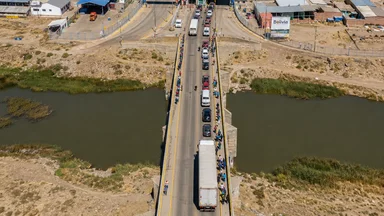
The Nong Khai border crossing, officially known as the First Thai-Lao Friendship Bridge, is one of the busiest overland entry points in Southeast Asia. It connects Vientiane, the capital of Laos, with the Thai town of Nong Khai. Thousands of travellers cross it every month, many of them assuming that the visa exemption they used at the airport will also apply here. It does not.
Take the case of a Canadian traveller who arrived at the Friendship Bridge in early 2024. She had spent two weeks in Laos and planned to continue into Thailand. At the immigration counter, the officer asked for her visa. She presented her passport, expecting a stamp. The officer explained that Canadian passport holders were not eligible for visa exemption at this crossing. She would need either a pre-arranged tourist visa or a visa on arrival, which cost roughly 2,000 baht (around US$55) and required a passport photo, a completed form, and proof of onward travel. She had none of these. After an hour of negotiation, she was allowed to purchase a visa on arrival, but only because the border post had a photo booth and a printer. Not all crossings do.
Forum posts on TripAdvisor and Reddit echo this experience. One user wrote that they were turned back at Nong Khai and had to take a bus back to Vientiane to apply for a visa at the Thai embassy there, losing two days of their trip. Another reported that the immigration officer offered a "special arrangement" for an extra fee, which the traveller declined. The Thai consulate in Vientiane confirms that no visa exemption exists at the Nong Khai crossing for most nationalities. The only way to enter without a visa at that checkpoint is if you hold a passport from one of the ASEAN member states, which have their own agreements.
The Nong Khai blunder is so common that it has spawned its own genre of travel advice. Blogs titled "How to Cross the Friendship Bridge Without a Visa" or "Nong Khai Border: What They Don't Tell You" proliferate. But the advice is often contradictory. Some say you can get a visa on arrival at the border; others say you cannot. The truth is that visa on arrival is available at Nong Khai, but only for nationals of a specific list of countries—roughly 20 nations, including China, India, and Taiwan. For most Western passport holders, the visa on arrival option does not apply, and they must have a visa in advance.
Paperwork Mistakes That Waste Days
Even when travellers know to get a visa in advance, paperwork errors routinely cause delays. The most common mistake is applying for a visa on arrival at a land crossing when the applicant is not eligible. The visa on arrival (VOA) is available only at designated airports and seaports, not at land borders. Yet many overlanders assume that because they can get a VOA at Suvarnabhumi, they can get one at Nong Khai or Chong Mek. They cannot.
Another frequent error is bringing the wrong photo size. Thai visa applications require a 4x6 cm photograph with a white background, taken within the last six months. Many travellers bring US-passport-size photos (2x2 inches), which are slightly smaller and are often rejected. At land borders without a photo booth, this means a return trip to the nearest town. The same problem applies to copies of passport pages and flight itineraries. Some checkpoints require a printed copy of the e-Visa approval letter, even though the officer can look it up in the system. Travellers who rely on their phone are turned away.
Proof of onward travel is another stumbling block. Immigration officers at land borders are more likely to ask for it than their airport counterparts. A bus ticket out of Thailand, a flight booking, or a hotel reservation in a third country usually satisfies the requirement. But a simple hotel booking within Thailand is not always accepted. Some officers want to see that you will leave the country, not just move to another city. A traveller on the Lonely Planet forum reported being denied entry at the Mae Sai border because she could only show a hostel booking in Chiang Mai, not a flight out of Thailand.
The lesson is to prepare for land entry as if it were a visa application, even if your nationality is normally exempt. Carry printed copies of your e-Visa (if applicable), a recent passport photo, proof of onward travel, and a bank statement showing sufficient funds. The requirements vary by checkpoint, but having these documents ready can save hours or days. The Thai MFA website lists the documents needed for each type of entry, but the information is scattered across multiple pages. A consolidated checklist would be a public service, but none exists in an official form.
What the Thai Embassy Actually Publishes
The Thai embassy website for the United States, as of mid-2025, includes a page titled "Visa Exemption." It lists the eligible nationalities and states that the exemption applies to "holders of valid passports who travel by air." There is no separate page for overland entry. The information is technically correct but easy to miss. A traveller scanning the list of countries might not read the fine print.
The Ministry of Foreign Affairs publishes a more detailed document, a PDF called "Visa Information." It runs to 15 pages and includes a table with columns for nationality, visa type, fee, and permitted entry points. For most exempt nationalities, the entry-point column reads "All international airports." The same document lists the four land crossings that allow visa-free entry for certain nationalities, but the formatting is dense and the relevant rows are easy to overlook. A traveller would need to scroll through the entire table to find their specific row.
The official e-Visa website, accessible through the Thai MFA portal, is the most user-friendly resource. It allows applicants to check their eligibility by nationality and purpose of travel. When a user selects a nationality that qualifies for exemption, the site displays a message: "You may be eligible for visa exemption when arriving by air." It does not say the same for land arrivals. The site also lists the visa-on-arrival countries and the designated checkpoints. But the information is presented in a series of dropdown menus, and a traveller who does not click through every option may miss the land-entry restriction.
Phone hotlines add to the confusion. The Thai immigration hotline, reachable at 1178 within Thailand, sometimes gives conflicting advice. Several travellers report being told over the phone that their nationality was exempt at all entry points, only to be denied at the border. The hotline operators may not be trained on the nuances of land versus air exemptions. The reliable source is the embassy in your home country or the MFA's official correspondence. But for a traveller already on the road, calling the hotline is often the only option, and it is not always accurate.
The Visa-Run Loophole That Persists
Despite the restrictions, a loophole remains for some overlanders. Under current rules, nationals of countries eligible for visa exemption can enter Thailand by land and receive a 15-day stay, rather than the 30 days granted to air arrivals. This option is available at a limited number of land crossings—roughly 10 checkpoints, mostly along the Malaysian border. The list includes Padang Besar, Sadao, Sungai Kolok, and the Second Thai-Lao Friendship Bridge, but notably excludes Nong Khai and most crossings from Cambodia and Myanmar.
The 15-day land-entry stamp is intended for short visits, not extended stays. Travellers who use it are limited to two land entries per calendar year. Attempting a third land entry triggers a rejection, and the traveller is asked to apply for a visa. This limit is enforced by immigration's computer system, which tracks entry stamps. Forum posts from 2024 describe travellers who were denied at the border because their passport showed two previous land entries within the same year, even if those entries were months apart.
Some overlanders still attempt same-day border runs—exiting Thailand and re-entering to reset their 15-day stamp—but enforcement is rising. Immigration officers at busy checkpoints like Sadao have been known to question travellers who return within 24 hours. A traveller who does this repeatedly risks being flagged and denied entry altogether. The advice on travel forums is shifting: do not rely on the land-entry loophole unless you have no other option.
The persistence of this loophole is partly a legacy of Thailand's earlier, more generous policy. Before 2016, land entries were unlimited and granted 30 days. The change was abrupt, and the 15-day option was introduced as a compromise. But the compromise is poorly communicated, and many travellers still arrive expecting the old rules. The result is a patchwork of enforcement that varies by checkpoint and officer discretion.
How to Actually Enter Thailand by Land
The surest way to enter Thailand by land is to apply for a single-entry tourist visa in advance. This visa costs roughly 1,000 baht (around US$30) and allows a 60-day stay, extendable by another 30 days at an immigration office. It is valid for entry at any international checkpoint—airport, seaport, or land border. The application is submitted online through the e-Visa system, which is available in most countries. Processing takes 3 to 5 business days, though it can stretch to two weeks during peak season.
The e-Visa application requires a scanned passport photo, a copy of your passport bio page, proof of accommodation (hotel booking or invitation letter from a host), proof of onward travel (flight or bus ticket out of Thailand), and a bank statement showing a balance of at least 20,000 baht per person or 40,000 baht per family. Some embassies also ask for a travel itinerary. The requirements are straightforward, but any missing document can delay the application. It is wise to apply at least two weeks before your planned departure.
Once you have the e-Visa, print the approval letter and carry it with your passport. At the land border, present both to the immigration officer. The officer will scan the barcode on the letter and stamp your passport. The process takes about five minutes. No additional fee is charged. The e-Visa is valid for 90 days from the date of issue, so you can enter Thailand within that window.
For travellers who cannot apply in advance—for example, because they are already on the road and do not have access to a printer—the visa on arrival is an option at some land borders, but only for nationals of the 20 eligible countries. Check the MFA website before you travel. If your nationality is not on the list, you must either obtain a visa from a Thai embassy in a neighbouring country or fly into Thailand. Flying is often simpler, even if it means changing your itinerary. A one-way ticket from Vientiane to Udon Thani, for instance, costs roughly US$50 and takes 30 minutes, compared to a bus ride that can take half a day and result in a denial.
Before any overland trip, check the current list of designated land checkpoints on the Thai MFA website. The list changes occasionally, and a checkpoint that allowed visa-free entry a year ago may no longer do so. As of early 2025, the reliable land crossings for pre-arranged visa holders are the Friendship Bridge at Nong Khai, the Chong Mek crossing, the Mae Sai crossing, and the Padang Besar crossing. But always verify. The MFA site is the only authoritative source; forum posts can be outdated.
The bottom line is that Thailand's visa policy is not as simple as the guidebooks suggest. The airport exemption is real and generous, but it does not extend to land borders. Overland travellers must plan ahead, apply for a visa, and carry the right documents. The system works if you know the rules. The problem is that the rules are not written for the people who need them most.