Rwanda Visa on Arrival Fees Shift by Nationality at Kigali Airport Desks
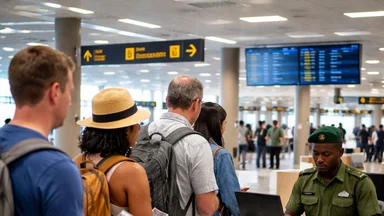
At the visa-on-arrival desks in Kigali International Airport, the fee you pay depends less on the visa category and more on the passport you carry. Unlike countries that publish a flat rate, Rwanda sets fees by nationality—and those numbers shift without public notice. Travellers who rely on last year's blog post or an outdated government site can end up queuing at an ATM, short of cash. This article walks through the categories, the stale-data traps, and the paperwork mistakes that turn a routine arrival into a budget headache.
Why Rwanda’s Visa Fees Vary by Passport at the Same Desk
Rwanda’s visa-on-arrival system does not post a single price list. Instead, immigration officers assign fees based on the traveller’s country of citizenship—a practice that reflects bilateral agreements and reciprocal arrangements. For example, nationals of East African Community (EAC) member states—Kenya, Uganda, Tanzania, Burundi, and South Sudan—receive a 90-day visa free of charge at the desk. That policy is clear and stable.
For other nationalities, the range is wide. In a July 2024 TripAdvisor post, a US passport holder reported paying US$ 40 for a single-entry, 30-day visa. Chinese passport holders, by contrast, have cited fees in the US$ 50–100 range in recent travel forums. A June 2024 Reddit post by a German traveller stated they paid US$ 40, while a Brazilian couple reported US$ 70 each in a May 2024 blog comment. No official schedule explains these differences.
The lack of a published list means that two travellers from different countries standing at adjacent desks can be quoted different amounts for the same visa. Immigration officers appear to have discretion within ranges, and that discretion is not documented. The Rwanda Directorate General of Immigration and Emigration maintains an e-visa site with fee information, but as of late 2024, the on-arrival fees listed there did not always match what travellers actually paid at the airport.
For budget-conscious travellers, the implication is straightforward: you cannot know the exact fee until you arrive. The best strategy is to carry more cash than you expect to need—roughly US$ 100–150 in US dollars or the equivalent in Rwandan francs—and to have a backup payment method. Credit cards are not accepted at the visa desks; it is cash only.
The Three Visa Categories at Kigali International Airport
The visa-on-arrival desks at Kigali Airport offer three main categories. The most common is the single-entry visa, valid for 30 days from the date of issue. This visa allows one entry into Rwanda and is suitable for tourists and short-term visitors. Fees for this category vary by nationality, as described above, but typically fall in the US$ 30–70 range for most non-EAC passport holders.
The multiple-entry visa is designed for business travellers or those who plan to leave and re-enter Rwanda during their stay. It is valid for 90 days and permits multiple entries. The fee for this visa is higher—roughly US$ 50–100, again depending on nationality. Some travellers have reported that the multiple-entry visa is not always offered at the desk; you may need to request it explicitly and provide evidence of business activities or a clear need for multiple entries.
The third category is the East African Tourist Visa, which covers Rwanda, Kenya, and Uganda for a single entry into each country over 90 days. This visa costs a flat US$ 100 regardless of nationality and must be applied for online at least seven days before travel. It is not available on arrival at Kigali Airport—a point that catches some travellers off guard. If you plan to visit more than one of these three countries, applying for the East African Tourist Visa in advance can save money compared to buying separate visas at each border.
Each category has its own fee range, and the nationality-based variation applies across all three. The single-entry visa is the most unpredictable; the East African Tourist Visa is the most standardised. Knowing which category fits your trip before you queue at the desk can prevent you from being upsold to a more expensive option that you do not need.
Stale Data: Where Online Fee Tables Fall Short
Rwanda’s official e-visa website (evisa.gov.rw) lists visa fees, but the numbers have not been updated consistently since 2022. Travellers who check the site before flying may find a fee of US$ 30 for a single-entry visa, only to be quoted US$ 50 at the desk. A May 2024 blog post by a Canadian traveller noted she was charged US$ 50 despite the e-visa site quoting US$ 30. This discrepancy has been reported on travel forums by multiple nationalities throughout 2023 and 2024.
The problem is not limited to the official site. Third-party travel blogs and guidebooks often copy fee tables from government sources and never update them. A 2021 blog post about Rwanda visa fees might still rank high in search results, leading travellers to budget for US$ 30 when the actual fee is US$ 50 or more. The data goes stale because the government does not announce changes publicly; they simply adjust the rate at the desk.
Cash-only payment adds another layer of risk. If you arrive with exactly the amount you saw online and the fee is higher, you will need to find an ATM inside the airport—which may charge high fees or have a withdrawal limit. Some travellers have reported being escorted to an ATM by immigration staff, an experience that is stressful and time-consuming after a long flight.
The US$ 20–30 gap between the e-visa fee and the on-arrival fee is common. The May 2024 Canadian traveller mentioned above had applied for the e-visa in advance and paid US$ 30, but when she arrived, the officer insisted she needed to pay the difference—which she did in cash. The lesson: even if you obtain an e-visa, carry extra cash for potential surcharges.
Common Paperwork Mistakes That Trigger Extra Costs
The most frequent paperwork error at Kigali Airport is a passport with fewer than six months of validity remaining. Rwanda, like many countries, requires that your passport be valid for at least six months beyond your intended date of departure. If your passport expires sooner, you may be denied entry or offered a short-term visa at a higher fee. Check your passport expiry before you book your flight.
A missing hotel booking printout is another common issue. Immigration officers often ask for proof of accommodation for the duration of your stay. A digital copy on your phone may not be accepted; a March 2024 TripAdvisor review stated that a printed hotel booking was required. If you cannot produce one, you may be asked to book a hotel on the spot—often at a premium rate—or pay a "processing fee" that some travellers have described as arbitrary. An August 2024 Facebook post described a US$ 20 processing fee for missing accommodation proof.
The yellow fever vaccination card—known as the Carte Jaune—is mandatory for entry into Rwanda. Officers check it at the visa desk. Common reasons for rejection include a card that is not signed by a health professional, a card that is damaged or illegible, or a vaccination that was administered fewer than ten days before arrival (the vaccine takes ten days to become effective). If your card is deemed invalid, you may be offered a vaccination at the airport clinic for a fee, or you may be denied entry.
Applying for the wrong visa category at the desk can also cost you. Some travellers, unaware of the East African Tourist Visa, purchase a single-entry visa for Rwanda and later discover they could have saved money by applying in advance for the multi-country visa. Conversely, travellers who request a multiple-entry visa without a clear reason may be charged a higher fee for a visa they do not need. Know your itinerary and carry supporting documents—such as a letter from your employer for business travel—to justify your visa choice.
How to Confirm Today’s Fee Before You Fly
Given the stale data problem, confirming the current fee for your nationality requires a proactive approach. The most reliable method is to call or email the Rwanda High Commission or embassy in your country. Embassy staff can often provide the most up-to-date fee schedule for your passport, though they may not have information on on-arrival fees specifically—some embassies only handle visa applications processed before travel.
Recent blog posts from travellers who share your nationality are a useful second source. Search for "Rwanda visa on arrival [your country] 2024" and look for posts dated within the past three months. Travel forums like TripAdvisor and Lonely Planet's Thorn Tree often have threads where travellers report the exact fee they paid. Cross-reference two or three reports to get a sense of the range.
Social media groups dedicated to travel in East Africa can be surprisingly current. Facebook groups such as "Rwanda Travel Tips" or "East Africa Backpackers" have members who post their visa experiences regularly. If you ask a specific question—"I'm a Brazilian passport holder arriving next week, what fee should I expect?"—you may get a response within hours from someone who just went through the process.
Finally, budget 20–30% extra in cash beyond the highest estimate you find. If you see reports of US$ 50 for your nationality, carry US$ 70 in crisp US dollars (bills must be in good condition; torn or marked notes may be refused). Rwandan francs are also accepted, but the exchange rate at the airport may not be favourable. Having a cushion of cash means you can absorb a surcharge without stress.
The East African Tourist Visa: A Cost-Saving Alternative
For travellers planning to visit Rwanda, Kenya, and Uganda—or even just two of the three—the East African Tourist Visa is a significant cost saver. It costs a flat US$ 100 and is valid for 90 days with single entry into each country. Compare that to buying three separate visas: a single-entry visa for Rwanda might cost US$ 50, for Kenya US$ 50, and for Uganda US$ 50—totalling US$ 150. The East African Tourist Visa cuts that by a third.
However, the visa has limitations. It must be applied for online through the e-visa portal of any of the three countries, at least seven days before travel. It is not available on arrival. The application requires a scanned passport bio page, a passport-sized photo, and proof of travel between the three countries (such as flight or bus bookings). Processing can take up to a week, so last-minute travellers cannot use it.
The visa is single-entry per country. That means if you enter Kenya, then Uganda, then return to Kenya, you will need a separate Kenyan visa for the second entry. A July 2024 blog post detailed a traveller who had to pay for a second Kenyan visa after re-entering. Some travellers have been caught out by this rule, assuming the visa allows unlimited movement within the region. It does not. Plan your route so that you enter each country only once, or accept that you will need to pay for additional visas.
Another quirk: the visa is issued by the country through which you apply, but it is honoured at all three borders. If you apply through Rwanda's e-visa site, you will receive a visa that lists Rwanda as the issuing country. When you arrive in Kenya, the immigration officer may not be familiar with the visa and could ask questions. A June 2024 forum post reported that a Kenyan officer initially refused the visa until shown the policy printout. Carry a printout of the visa approval letter and a copy of the official East African Tourist Visa policy to smooth the process.
For travellers who are only visiting Rwanda, the East African Tourist Visa is not worth the extra cost and hassle. But for those planning a multi-country trip, it is the most budget-friendly option—provided you apply early and understand the single-entry restriction.
Final Checklist Before You Queue at the Visa Desk
Before you join the queue at Kigali Airport, run through this checklist to avoid surprises. First, carry exact cash in US dollars or Rwandan francs. US dollars should be crisp, unmarked, and issued after 2009 (some officers reject bills issued before 2009). Do not rely on credit cards or mobile payments; the visa desks accept only cash.
Second, have a photocopy of your passport bio page and your visa application form (if you applied for an e-visa). Immigration officers may ask for these to speed up processing. A printed copy of your hotel booking and a return flight itinerary—also printed—are often requested. Digital copies on your phone are not always accepted.
Third, ensure your yellow fever vaccination card is signed and in good condition. If you lost the original, you can get a replacement from a travel clinic, but it must be the official WHO card. A photocopy of the card is not acceptable; you need the original.
Fourth, have a local contact number ready on paper. If you are staying at a hotel, write down the hotel name, address, and phone number. If you have a friend or business contact in Rwanda, include their name and number. Immigration officers may ask for this information, and having it written down avoids fumbling with your phone.
Finally, be prepared for the fee to be different from what you expected. If you budgeted US$ 50 and the officer quotes US$ 70, pay it without argument—arguing can lead to delays or denial of entry. After you receive your visa, note the exact fee and share it on a travel forum to help the next traveller. The system is opaque, but travellers can make it more transparent by reporting their experiences.
For more on border-crossing costs and budgeting, see Peru visa overstay math and Chile tourist card renewal—two other articles that cover entry-rule quirks in different regions.