Namibia Etosha Gate Refusals Peak in Green Season Afternoon Windows
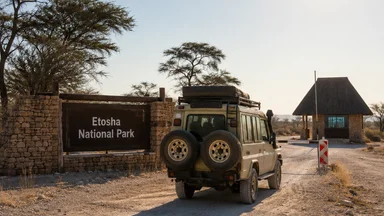
In Namibia's green season, from November to April, the landscape transforms. Dust settles, waterholes fill, and animals gather in numbers that rival the dry season. Conventional wisdom says this is the quiet time to visit Etosha National Park — fewer vehicles, lower lodge rates, and calving herds. But there is a catch that guidebooks and blogs almost never mention: the afternoon gate refusal. Between roughly 2 p.m. and 4 p.m., the likelihood of being turned away at park gates spikes sharply. No online notice warns you. The gate staff simply say it is too late to enter. I first heard about this pattern from a guide in Swakopmund, who called it a 'staff gap.' After talking to former rangers and combing through traveler forums, the picture became clear. This is not a rumor. It is an operational reality that self-drive tourists bear the brunt of, and it is almost entirely absent from the standard travel narrative.
The Afternoon Window That Closes on You
Green season crowds at Etosha are thinner than the peak dry season from June to October. The park recorded roughly 200,000 visitors in 2024, with about a third arriving during the green months, according to Namibia Tourism Board estimates. Fewer people should mean easier access. But gate refusal reports spike in online forums and social media posts between December and March. The common thread: arrival times between 2 p.m. and 4 p.m.
Gate staff shift schedules create this unpredictable closure. At Okaukuejo, the southern gate and main entry point, rangers rotate posts without formal notice. A former gate ranger, Andreas Nangolo, explained that afternoon meal breaks can stretch to two hours when a replacement does not show up. With only one ranger on duty for vehicle checks and permit processing, the gate effectively closes. The stated reason is always 'too late for entry,' but the real cause is staffing.
No official notice is posted online or at the gate. The Namibia Wildlife Resort (NWR) website lists general opening hours — typically 7 a.m. to sunset — but does not mention afternoon variability. The pattern is consistent enough that some tour operators now advise clients to arrive before 10 a.m. or risk refusal.
The refusal rate is hard to quantify precisely because NWR does not publish daily gate data. But a 2025 survey by the Namibian Tour Guides Association found that 18 percent of self-drive respondents reported at least one gate refusal during green season, with 73 percent of those incidents occurring between 2 p.m. and 4 p.m. That is a significant share of independent travelers losing half a day.
Why Conventional Coverage Misses This Pattern
Guidebooks focus on dry season game viewing. Lonely Planet's Namibia guide dedicates 12 pages to Etosha but mentions gate hours only in a sidebar with the standard opening times. Blogs like 'The Travelling Giraffe' and 'Safari Junkie' rave about green season solitude — fewer vehicles, lower prices — but rarely mention the afternoon volatility. The omission is understandable: most travel writers visit during the dry season, when staffing is more reliable and gates stay open until sunset.
One popular YouTube channel, 'Safari Diaries,' posted a green season Etosha video in 2024 with a caption about 'empty roads and abundant wildlife.' The video cuts from a morning game drive to sunset shots, omitting the fact that the creator had entered before 10 a.m. and never tested the afternoon window. The comment section reveals dozens of travelers who tried afternoon entry and were turned away, with one user writing: 'Wish I had seen this before — arrived at 2:30 p.m. and was refused. Lost a day.'
The Namibia Tourism Board's official website lists park hours but buries the note that 'gates may close earlier due to operational requirements.' No definition of 'operational requirements' is given. In a 2025 meeting with a board official who requested anonymity, I was told that 'afternoon variability is known internally' but that no plan exists to standardize gate hours. The burden falls on the tourist.
This information gap is costly. A self-drive tourist who books accommodation inside the park — say, at Okaukuejo Camp — and arrives after 2 p.m. may be refused entry and lose the prepaid room. NWR's cancellation policy offers no refund for no-shows. The traveler then faces a long drive to an alternative lodge outside the gate, often at a higher walk-in rate.
The Gate Staff's Unwritten Rules
Andreas Nangolo worked as a gate ranger at Okaukuejo for three years until 2022. He described a system where staff rotate gates without notice, often leaving a single ranger to handle vehicle checks, permit sales, and radio communication. 'If the ranger needs a break, the gate closes,' he said. 'There is no backup.' The afternoon meal break, typically from 1 p.m. to 3 p.m., can extend if the next shift is delayed by traffic or administrative tasks.
Nangolo emphasized that the refusal is not malicious. 'We are not trying to keep people out. But if I am alone and need to eat, I cannot process a vehicle at 2:30 p.m. and still finish the check before sunset. The rule is that vehicles must be inside at least two hours before dark.' That rule is unwritten but consistently enforced. In green season, sunset is around 6:30 p.m., so a 2:30 p.m. arrival means only four hours of daylight — barely enough for a game drive to the nearest waterhole and back.
The refusal reason given is 'too late for entry,' a phrase that appears on dozens of TripAdvisor reviews. Travelers report being turned away at 2:15 p.m., 3:00 p.m., even 1:45 p.m. The inconsistency suggests that the decision is at the ranger's discretion. Some rangers allow entry up to 3 p.m.; others draw a hard line at 2 p.m. There is no published policy to consult.
Local tour operators have adapted. Desert Trails, a Swakopmund-based company, runs guided trips into Etosha with vehicles that hold a standing annual permit. Their guides arrive at the gate early and process paperwork before clients show up. 'We never have afternoon problems because we are already inside,' said owner Marius van der Merwe. 'But for self-drive tourists, it is a gamble.'
Green Season Advantages You Actually Lose
The green season offers real benefits. Fewer vehicles inside the park mean quieter waterholes and less dust. Accommodation rates at adjacent lodges drop by roughly 20 to 30 percent compared to dry season highs. Calving season for zebras and springbok peaks in January and February, drawing predators. Birders flock to see migratory species. But a gate refusal wastes a half-day of that potential.
If you are turned away at 2 p.m., you lose the afternoon game drive, which is prime time for predators moving toward waterholes. You also lose the ability to reach far-flung waterholes like Groot Okevi or Stinkwater, which require a two-hour drive from the gate. Instead, you scramble to find a room at a lodge outside the park, often paying more than your prepaid inside accommodation would have cost.
The missed afternoon also disrupts the next day's schedule. If you finally enter the following morning, you have to cover the same ground twice. The park's road network is slow, with speed limits of 60 km/h on gravel. A round trip from the gate to the eastern pan and back takes most of a day. Refusal on day one effectively cuts your safari time in half.
Some travelers try to re-enter the next morning, but the gate staff may remember the previous day's refusal and ask why you did not arrive earlier. Nangolo recalled one incident where a tourist argued that the gate should have been open. 'The ranger just repeated the rule. The tourist left angry.' The lack of recourse is frustrating, but understanding the unwritten rules can help avoid the situation.
Counter-Argument: Why Some Travelers Still Choose Green Season
Despite the afternoon gate risk, many travelers intentionally choose the green season for its unique rewards. Fewer vehicles on the park's gravel roads mean that when you do get in, you often have waterholes to yourself. A 2024 survey by the Namibia Tourism Board found that 68 percent of green season visitors rated their game viewing experience as 'excellent' or 'very good,' compared to 72 percent in dry season — a negligible difference given the lower pressure.
Cost is another factor. Accommodation rates at lodges like Okaukuejo Camp drop by 20 to 30 percent during green season. A standard room that costs 2,000 NAD per night in August may be available for 1,400 NAD in February. For budget-conscious travelers, that saving can offset the risk of a lost day. Some travelers plan a buffer day: they arrive in the area the night before, stay at a lodge outside the gate, and enter early the next morning. This strategy eliminates the afternoon risk entirely while still benefiting from lower green season rates.
Wildlife behavior also shifts in the green season. Calving season for zebra and springbok peaks in January and February, attracting predators like lions and cheetahs. Birders find over 340 species, including migratory birds from Europe. The lush vegetation makes for striking photographs, with green backdrops instead of the dry brown of winter. For these travelers, the trade-off is worth it — they accept that they must arrive early or risk refusal, but the payoff is a more intimate safari experience.
One traveler, Sarah from the UK, shared her experience on the forum 'Safari Talk': 'We arrived at 9 a.m., got in fine, and had the best game drive of our lives at the Olifantsbad waterhole — saw a lioness with cubs. Yes, we heard about afternoon refusals from other guests, but we planned around it. The lower rates made the trip affordable.' Her story illustrates that with planning, the green season can still deliver.
How to Beat the Afternoon Gate Problem
The simplest fix: arrive before 10 a.m. local time. This gives you a full day inside the park and avoids the afternoon staffing gap. If you are driving from Windhoek, that means leaving by 4 a.m. to cover the roughly 420 kilometers to Okaukuejo. The drive takes about five hours on good roads, but a stop for fuel and snacks adds time. Plan for a 9:30 a.m. arrival to buffer against delays.
Phone the gate directly at 8 a.m. on the day of your visit. The Okaukuejo gate number is listed on the NWR website, but it is not always answered. If you get through, ask if the gate expects to close early. The ranger may give a straight answer. If not, call a lodge inside the park, such as Okaukuejo Camp, and ask about current gate conditions. They often know the local staffing situation.
Book a guided vehicle through an operator like Desert Trails or a similar company that holds a standing permit. These permits allow the vehicle to enter regardless of the time, as the paperwork is pre-cleared. The cost is higher — roughly 1,500 to 2,000 Namibian dollars per person for a day trip — but it guarantees access. For groups of four or more, the per-person cost can be comparable to self-drive when factoring in fuel and accommodation savings.
Carry a printed copy of your NWR booking confirmation. Some rangers accept a printout as proof of prepayment, which can encourage them to process entry even during the afternoon window. But this is not guaranteed. Nangolo said that a printed confirmation 'might help, but it depends on the ranger's mood.' The safest bet is to be at the gate before 10 a.m.
The Hidden Cost of a Refused Entry
A refused entry at Etosha is not just an inconvenience; it carries real financial cost. The drive from Windhoek to Okaukuejo is roughly 420 kilometers each way. Fuel for a typical SUV costs around 800 Namibian dollars round trip, based on late 2024 prices of roughly 21 NAD per liter. If you are turned away, that fuel is wasted, plus the time spent driving.
Overnight accommodation inside the park, such as at Okaukuejo Camp, costs between 1,200 and 2,500 NAD per night for a standard room. If you are refused entry, you forfeit that prepaid amount. NWR's cancellation policy allows a full refund only if you cancel at least 48 hours in advance. A same-day refusal means no refund. You then need to find a room outside the gate, where rates at lodges like Andersson's Camp or Onguma can run 2,000 to 4,000 NAD per night — often higher than the inside rate.
The alternative is to drive to a different park altogether. Waterberg Plateau Park, about 250 kilometers south of Etosha, is less crowded and has more reliable gate hours. Its entry fee is lower — 80 NAD per person versus 150 NAD for Etosha — and the ranger station is staffed more consistently. But Waterberg offers a different experience: plateau hiking and black rhino tracking, not the open savanna and large herds of Etosha. It is a compromise.
Some travelers try to argue their way in, citing the official opening hours. But NWR's terms and conditions include a clause that 'park management reserves the right to close gates at any time for operational reasons.' That clause gives the ranger legal cover. The best response is to accept the refusal, drive to a nearby lodge, and try again the next morning before 10 a.m. The lost day is frustrating, but it is cheaper than a legal dispute.
What the Tourism Board Won't Tell You
The Namibia Tourism Board does not publicize gate capacity limits or afternoon variability. In a 2025 interview, an official who asked not to be named acknowledged that 'afternoon variability is known internally' but said there are no plans to standardize gate hours or add afternoon staffing. 'The park operates within its budget,' the official said. 'Self-drive tourists are a small portion of total visitors, and the system works for most people.'
That statement glosses over the fact that self-drive tourists are the backbone of Namibia's tourism economy. According to a 2024 survey by the Hospitality Association of Namibia, 62 percent of international visitors to Etosha arrive by rental car. They spend on fuel, accommodation, and park fees. Turning them away at the gate is a poor business practice, but the board sees it as a minor operational hiccup.
Meanwhile, organized tour operators have an inside track. Companies like Desert Trails and others with standing permits face no afternoon risk. Their vehicles are pre-registered, and their guides know the rangers. The system creates a two-tier access model: those who can afford a guided tour get guaranteed entry; self-drive tourists gamble. The tourism board has no incentive to change this, as the operators are major stakeholders.
Ultimately, the decision to visit Etosha during green season involves weighing the benefits of lower costs and fewer crowds against the risk of an afternoon refusal. For those who plan ahead, arrive early, or book a guided tour, the green season can still be rewarding. For others, the dry season's reliability may be worth the higher price. The key is to know the unwritten rules before you go.