Philippines Peso Buy-Sell Spread Widens After 3 PM Ferry Arrivals
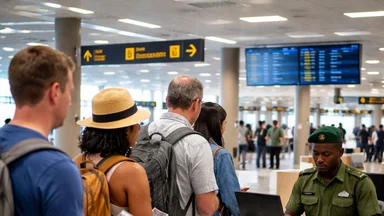
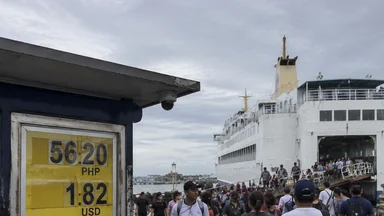
Every afternoon, ferries from Cebu and Bohol dock at Manila's Pier 4 and Pier 15, disgorging hundreds of passengers. Within minutes, the buy-sell spread on the Philippine peso widens from a typical 1 percent to 3–5 percent. Most tourists never see it coming. They arrive tired, spot a money changer, and accept a rate that silently costs them 200–400 pesos on every 10,000-peso exchange. This is not a scam—it's a predictable market reaction to a surge in supply. The same dynamics apply to SIM cards, ATM withdrawals, and even bottled water. Here is how to work around them, based on what locals actually do.
Why the Peso Spread Widens After 3 PM
The mechanics are straightforward. Ferry arrivals from Cebu, Bohol, and other islands peak between 2 PM and 5 PM. Passengers—many of them domestic travelers or OFWs returning with cash—need to convert pesos from foreign currency or simply exchange large bills for smaller denominations. Money changers at the piers know they have a captive audience. With most banks closing by 3 PM (some branches shut as early as 2:30 PM), the formal banking channel narrows. The remaining options are pier-side changers and a handful of mall kiosks that stay open later.
Supply and demand shift sharply. Suddenly there are more pesos on offer than buyers willing to take them at the mid-market rate. Changers adjust by lowering their buy price and raising their sell price. The spread—the gap between what they pay for foreign currency and what they charge—jumps. On a typical morning, you might see a buy rate of 55.2 pesos to the US dollar and a sell rate of 55.8, a spread of about 1 percent. By 4 PM, the same changer might offer 54.5 buy and 56.2 sell, a spread of 3 percent or more.
Some estimates from frequent travelers and online forums suggest spreads can hit 5 percent on busy afternoons, especially around holidays. The Bangko Sentral ng Pilipinas (BSP) publishes a daily reference rate, but no pier-side changer is obligated to follow it. They set their own rates based on inventory and foot traffic.
This is not unique to the Philippines—similar patterns occur around transport hubs worldwide—but the concentration of ferry arrivals in a narrow window makes Manila's pier district particularly prone. If you arrive on a 3 PM ferry, you are walking into the worst possible time to exchange money.
To put the cost in perspective, consider a tourist exchanging US$200. At a 1 percent spread, the loss is roughly US$2. At a 5 percent spread, the loss jumps to US$10. That extra US$8 could buy a meal or a jeepney ride for a week. The difference is small per transaction but adds up over a trip. For those exchanging larger amounts—say, US$1,000 for a longer stay—the difference is US$40, enough for a night in a budget hotel. The key is to avoid exchanging at the pier during the afternoon rush.
Pier-Side Exchangers vs. Mall Kiosks
The difference between a pier-side exchanger and a mall kiosk can be 1–2 percentage points on the spread. Mall kiosks in SM Department Stores or Robinson's malls—both of which have branches near the ferry terminals—typically offer rates closer to the BSP reference. They operate on higher volume and lower margins, and they face competition from other kiosks in the same corridor.
Pier-side changers, by contrast, are often independent operators with higher overheads (rent near the pier is expensive) and less competition. They also know that most customers are in a hurry. A common tactic is to display an attractive rate for large notes (US$100) but a worse rate for smaller bills or other currencies. Always ask for the rate on the specific denomination you have.
A useful benchmark: check the BSP website or a reliable app like XE for the mid-market rate before you approach any changer. If the buy rate is more than 2 percent below the mid-market, you are better off waiting. Mall kiosks inside SM City Manila or Robinson's Place Ermita are a short jeepney ride or a 10-minute walk from Pier 4. They stay open until 8 PM or later.
Avoid exchangers that advertise “no commission.” That phrase usually means the spread is already baked in, and it is often wider than at places that quote a transparent commission. A “no commission” sign is a red flag, not a promise of a fair deal.
Another option is to exchange money at your hotel. Many mid-range and upscale hotels in Manila offer currency exchange at rates comparable to mall kiosks, though they may have lower limits. It is worth asking at the front desk. Some hotels will match the mall rate if you show them a screenshot. This is especially useful if you arrive late when malls are closed.
The ATM Trap and Dynamic Conversion
ATMs at ferry terminals charge a flat fee of 250 pesos per withdrawal (as of late 2024). That is roughly US$4.50. On a small withdrawal, the fee alone can eat 5–10 percent of the amount. The second trap is dynamic currency conversion (DCC). When you insert your foreign card, the ATM screen may ask if you want to be charged in your home currency. Always decline. Choosing your home currency triggers DCC, which adds a 3–4 percent markup on top of the ATM fee. Choose Philippine pesos instead, and let your bank handle the conversion at its own rate.
BPI and Metrobank ATMs tend to be the most reliable in the ferry terminal area. They have higher withdrawal limits (up to 10,000–20,000 pesos per transaction) and are less likely to run out of cash on busy afternoons. Some ATMs from smaller banks have lower limits and charge an additional fee on top of the 250-peso levy.
The simplest way to minimize fees is to withdraw larger sums less often. If you need 20,000 pesos, withdraw it in one transaction rather than two 10,000-peso withdrawals. That reduces the per-peso cost of the fee from 2.5 percent to 1.25 percent. Still, ATM fees in the Philippines are among the highest in Southeast Asia, so it is worth carrying a modest amount of cash for your first day and then finding a bank branch to exchange money during business hours.
There is a trade-off here: carrying large amounts of cash carries its own risk of theft or loss. A money belt or a secure inner pocket helps. For many travelers, the safest approach is to bring US$100–200 in cash for the first day, then use a combination of ATM withdrawals (large amounts) and mall kiosk exchanges for the rest. This balances fee minimization with security.
Local Workaround: Prepaid Load and GCash
Most Filipinos do not rely heavily on cash or bank transfers for everyday payments. They use GCash, a mobile wallet that works through a smartphone app. You can load cash into GCash at any 7-Eleven, Palawan Pawnshop, or authorized GCash outlet. Once loaded, you can pay merchants, transfer money to other GCash users, and even withdraw from partner ATMs without a card.
For tourists, the catch is that you need a Philippine SIM card to register for GCash. Once you have a Globe or Smart SIM, you can download the app and register with your passport. The process takes about 10 minutes. After that, you can load cash at a convenience store—typically with no fee for loads up to 10,000 pesos—and use GCash to pay for meals, transportation, and some ferry tickets.
Some merchants offer better rates for GCash payments than for cash, because they avoid the hassle of handling and depositing physical currency. A few smaller eateries near the piers give a 5 percent discount for GCash. It is not universal, but it is worth asking.
GCash-to-bank transfers are near-instant and cost a small fee (around 10–20 pesos). If you have a bank account back home that supports international transfers, you can move money from GCash to your home bank via services like Wise or PayPal, though that adds another layer of fees. For most short-term visitors, GCash is best used as a spending wallet, not a remittance tool.
One counter-argument: GCash requires a constant internet connection, which may not be reliable on ferries or in remote areas. Also, not all merchants accept GCash. In markets or small sari-sari stores, cash is still king. So do not rely entirely on GCash; keep a cash buffer for situations where the app cannot be used.
SIM Card Registration Realities
Since December 2023, all SIM cards in the Philippines must be registered with a valid ID. Tourists can use their passport to register for a 30-day tourist SIM from Globe or Smart. The process is straightforward but has a few gotchas.
The best place to buy a SIM is at the airport. Globe and Smart have kiosks at NAIA Terminal 3 (the main international terminal) that sell tourist SIMs with pre-loaded data. They will help you register on the spot. At the ferry piers, kiosks are less common and often sold out of tourist SIMs, especially in the afternoon rush. If you arrive at a pier without a SIM, you may have to walk to a nearby Globe or Smart store—there is a Globe store on T.M. Kalaw Street, a 15-minute walk from Pier 4.
Do not insert the SIM before registering. If you insert it, the phone will prompt you to register online. You can do that via the Globe or Smart website, but you will need an internet connection. Some travelers have reported that the registration portal is slow or rejects passport numbers with special characters. A workaround is to use a portable Wi-Fi device or ask a local to hotspot you while you register.
The registration is valid for 30 days. If you stay longer, you can extend it at a Globe or Smart store, or simply buy a new SIM and register again. Some visitors find it easier to buy an eSIM from an international provider before arrival, but those are typically more expensive and may not work with GCash registration.
Another option is to buy a prepaid SIM from a convenience store like 7-Eleven, which often stocks Globe and Smart SIMs. However, these may not be tourist-specific and may have less data. Always check the data allocation and validity period before buying. For heavy data users, a tourist SIM with 10–20 GB for 30 days is usually the best value.
The Water Bottle Puzzle
Tap water in Manila is not potable. That is well-known. What catches tourists off guard is the price of bottled water at the piers. A 500-milliliter bottle costs 25–30 pesos at pier-side vendors. At a supermarket like Puregold or SM Hypermarket, a 1.5-liter bottle costs 15–20 pesos. The per-liter markup at the pier is roughly 3x.
The simple fix: bring an empty reusable bottle and fill it at your hotel. Most hotels in Manila have filtered water dispensers in the lobby or provide complimentary bottled water. If you are staying at a budget guesthouse, ask at the front desk. Many will refill your bottle for free or a small fee.
Some ferries sell water onboard at a markup similar to the pier vendors. The 2Go Travel ferries, for example, sell 500-ml bottles for 30 pesos. If you are boarding a ferry, buy water at a supermarket before you reach the terminal. There is a Puregold supermarket a 5-minute walk from Pier 4, on Anda Circle.
If you forget, look for vendors outside the terminal gates rather than inside. The vendors just outside the gate often sell at 20 pesos for 500 ml—still a markup, but less severe. And do not assume that water from a tap on the ferry is safe. Stick to sealed bottles.
Hydration is important in Manila's tropical heat, but it does not have to be expensive. A reusable bottle pays for itself in a day or two. If you are concerned about water quality, consider a portable water filter or purification tablets, which can treat tap water and save you from buying bottled water altogether. However, for most short-term visitors, buying large bottles from a supermarket is the simplest and cheapest option.
Paperwork That Catches Tourists Out
The Philippines requires all travelers to complete an eTravel registration within 72 hours before arrival. This is a digital form that collects basic information: passport details, flight number, hotel address, and health declaration. You receive a QR code that you must present upon arrival. Many tourists forget to do this until they land, then scramble for Wi-Fi at the airport while queueing at immigration.
Print the QR code. Do not rely on your phone's screen—battery dies, screens crack, and airport Wi-Fi can be flaky. A printed copy is accepted at immigration and at ferry check-in counters. Some inter-island ferries (e.g., 2Go, FastCat) also ask for the eTravel QR code when you check in for a domestic voyage, even though it is not officially required for domestic travel. The policy is inconsistently enforced, but a printed copy saves hassle.
Ferry check-in generally requires a booking reference number and a valid ID. Some operators, like 2Go, also ask for your hotel address in Manila or your next destination. Have that written down. A photocopy of your passport bio page is useful—some piers require it for security, and it speeds up check-in if you need to leave your passport with the counter (they usually return it before boarding).
Keep the photocopy separate from your actual passport. If your passport is lost or stolen, the photocopy makes replacement faster. It is a small precaution that pays off disproportionately.
Additionally, consider registering for the Philippines' online arrival card (eArrival) if you are arriving by air. This is separate from eTravel and is used for customs and quarantine. Some travelers confuse the two. The eArrival card can be completed up to 30 days before arrival and is also QR-coded. Having both QR codes ready on your phone (and printed) saves time at multiple checkpoints.
Putting It All Together: A Sample Afternoon Strategy
Imagine you arrive at Pier 4 on a 3 PM ferry from Cebu. Here is a step-by-step plan to avoid the worst of the spread and fees:
- Before disembarking, check the mid-market rate on your phone (if you have signal) or use an offline rate app.
- Do not exchange money at the pier. Instead, walk to SM City Manila (10 minutes) or Robinson's Place Ermita (15 minutes) to use a mall kiosk. The walk also gives you a chance to see the area.
- If you need cash immediately, use a BPI or Metrobank ATM inside the mall. Withdraw a large amount (10,000–20,000 pesos) in one go to minimize the per-transaction fee. Decline DCC.
- Buy a prepaid SIM at the Globe store on T.M. Kalaw Street or at a 7-Eleven. Register it with your passport using the store's Wi-Fi or a hotspot from a cafe.
- Purchase a 1.5-liter bottle of water at the Puregold supermarket on Anda Circle for 15–20 pesos.
- If you plan to use GCash, load cash at a 7-Eleven or Palawan Pawnshop. This can be done anytime.
- Keep your printed eTravel QR code and passport photocopy handy for ferry check-in and any security checks.
By following this sequence, you avoid the 3–5 percent spread, the 250-peso ATM fee on small withdrawals, the 30-peso water bottle, and the SIM registration headache. The total savings on a typical first day could be 500–700 pesos (roughly US$9–13), which is enough for a decent meal or a few jeepney rides.
When the Rules Break Down: Exceptions and Edge Cases
Not every afternoon follows the pattern. On days with fewer ferry arrivals—say, a Tuesday in the low season—the spread may only widen to 2 percent. Conversely, during peak travel periods like Christmas or Easter, the spread can exceed 5 percent. Also, some pier-side changers are more reputable than others. A few operate near the mid-market rate even in the afternoon, especially if they have a loyal customer base among frequent ferry users. It pays to observe the rates at multiple changers before committing.
Another exception: if you are exchanging a very large amount (over US$1,000), some changers may negotiate a better rate. Do not be shy about asking. They would rather give you a slight improvement than lose the business entirely.
Finally, if you are arriving on a ferry from a nearby island like Mindoro or Palawan, the afternoon crush is less severe because those ferries carry fewer passengers. The spread widens most dramatically after the big Cebu and Bohol ferries arrive.
For more on how timing affects travel costs in other regions, read our guide on Romania street-food cash math after 8 PM and the Thailand night train vs. midday hostel comparison. Both illustrate how small schedule shifts change the economics of a trip.