Norway Fjord Ferry Schedules Shift Twice Before the June Midnight Sun Window
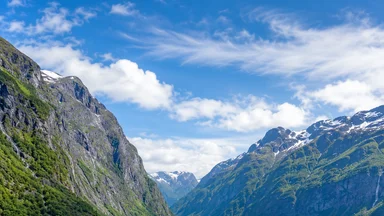
Norway's fjord ferries run on a calendar that ignores the tourist brochure. The country's western coastline, a jigsaw of deep fjords and steep islands, depends on a ferry network that shrinks and expands with the seasons. Twice before the June midnight sun window, ferry operators quietly update their PDF timetables, cutting crossings from winter frequencies and then again from spring schedules. Travelers who show up in early May expecting summer service often find themselves staring at a departure board that lists the next boat in four hours, or worse, none at all until the following morning.
This is not a secret. Local tourism offices in places like Bergen and Flam admit every year that the confusion is predictable. The problem is that most guidebooks and travel websites repeat the phrase "open year-round" without explaining that "open" means something different in March than it does in July. A ferry route might technically operate every day of the year, but on a winter schedule of three crossings daily instead of twelve. The difference between getting where you want to go and spending an extra night in a village you never planned to see comes down to understanding when those shifts happen.
The core window for a reliable Norway fjord trip runs from late June to mid-July, when daylight lasts twenty-four hours in the north and ferry frequencies hit their peak. But that window is narrow, and the shoulder seasons that bookend it offer trade-offs worth considering. This feature walks through the schedule shifts, the realistic itinerary lengths, and the packing choices that make or break a trip in a climate that forgets to warm up.
Ferry Schedules as a Seasonal Lie Detector
The first timetable shift happens in early May, when winter schedules give way to spring. On many routes, this means an increase from two or three daily crossings to five or six. But spring is not summer. The second shift comes in early June, when summer timetables kick in and frequencies jump to eight, ten, or twelve crossings a day. The gap between these two shifts is where travelers get caught.
Consider the ferry from Hellesylt to Geiranger, a route that carries sightseers into the Unesco-listed Geirangerfjord. In winter, the crossing runs once daily, if conditions allow. In spring, it might run twice. But the full summer schedule, with multiple departures and connection windows for car ferries and express boats, does not start until the first week of June. A traveler arriving in mid-May expecting hourly boats will find a very different reality.
Ferry companies update their PDFs quietly. The official website, ferry.no, lists live departures, but the timetable periods are labeled "winter," "spring," "summer," and "autumn." The spring shift is usually the first week of May. The summer shift is the first week of June. The autumn shift comes in late August. Missing these cutoffs by a few days can mean the difference between a smooth journey and a forced overnight stop.
Local tourism offices in places like Alesund and Molde confirm that they field the same questions every year. "Is the ferry running?" The answer depends on the date, not the brochure. Some offices maintain their own PDF calendars, but they admit that even they struggle to keep up with operator changes. The best strategy is to check the ferry.no site for the specific route and date, not just the season.
Why Brochures Say 'Open Year-Round' and Ferries Don't
Norway's coastal ferry network is not a single system. Hurtigruten, the iconic coastal steamer, runs daily year-round from Bergen to Kirkenes. That is a genuine 365-day service. But Hurtigruten is a cruise-like ship that carries passengers and vehicles on a long-haul route, not the short-hop ferries that connect fjord villages. The distinction matters.
The Kystveien road 17, a scenic route that hugs the coast north of Trondheim, depends on seasonal ferry links. In summer, ferries run frequently enough to make the drive smooth. In winter, some crossings reduce to a single morning departure. The same applies to the Sognefjord car ferries, which dwindle after September and do not resume full frequencies until June. A brochure that says "open year-round" for a ferry route is technically true if the ferry runs at all, but it obscures the practical reality.
Geirangerfjord sightseeing boats start running in mid-May, but the full schedule, including the popular round-trip from Geiranger to Hellesylt, does not kick in until June. The Trollfjord cruise skippers, who operate small sightseeing boats in the Lofoten Islands, often skip May altogether because of fog windows that make navigation risky. They are not required to run in marginal conditions, and they do not.
The gap between what brochures claim and what ferries deliver is not malicious. It is a function of Norway's operating economics. Running a ferry at full summer frequency in May, when passenger numbers are still low, does not make financial sense. The companies optimize for the peak, and the shoulder seasons get a reduced service. Travelers who understand this can plan around it, but those who assume "year-round" means "frequent" end up stranded.
The Three-Week Window That Actually Works
A humane Norway fjord itinerary needs at least fourteen days to cover the essentials without rushing. The window from late June to mid-July offers twenty-four-hour daylight, which means you can hike at midnight and still catch the last ferry of the day. That flexibility makes the trip feasible at a pace that does not feel like a checklist.
Start in Bergen. Give it two full days: one for the city and the Floibanen funicular, another for the boat trip to the fjords. Then take the Bergen Railway to Myrdal and connect to the Flam Railway, a descent of roughly twenty minutes that drops you into the Aurlandfjord. Budget at least two days for the Flam area, including a fjord cruise to Gudvangen and back. That is four days gone already.
From Flam, drive or take the bus to the Sognefjord region and then north toward Alesund. The road journey from Flam to Alesund, including ferry crossings, takes a full day. Alesund deserves one night for its Art Nouveau architecture and the viewpoint at Aksla. Then continue to Molde and catch the ferry to Vestnes, heading toward the Atlantic Road. That stretch adds another day.
The Lofoten Islands need four to five days for a proper road trip. Fly from Bodø to Leknes or take the ferry from Bodø to Moskenes. The ferry is the budget option, but it sells out daily in summer. The alternative is a Widerøe flight, which costs more but saves time. Once in Lofoten, drive the E10 from Moskenes to Svolvær, stopping at Reine, Hamnøy, and Henningsvær. A full loop takes three days at a relaxed pace, four if you add side hikes.
Nordkapp, the northern plateau, is accessible only from June to August. The road to the North Cape is open year-round, but the visitor center and the plateau itself close in winter. A trip from Lofoten to Nordkapp adds three days of driving each way, so it fits only in a longer itinerary. For a two-week trip, skip Nordkapp and focus on Lofoten and the fjords. The Oslo to Bergen railway remains the reliable spine of any trip, connecting the capital to the fjord region in about seven hours.
What Changes in the Shoulder Season (and What Doesn't)
Shoulder season in Norway runs from mid-May to mid-June and again from mid-August to mid-September. The trade-off is simple: fewer crowds and lower prices versus reduced ferry frequencies and unpredictable weather. Hiking trails dry out by late May, but snow lingers at higher elevations into June. The Preikestolen cliff, a popular hike near Stavanger, opens officially from mid-May to September, but the trail can be muddy and slippery in early spring.
Glacier hiking companies start running trips in early June, but they require a minimum number of participants. In May, you might be the only one on the tour. In July, you will be part of a group of twenty. The experience is different, not better or worse. Mountain lodges in the Jotunheimen and Dovrefjell ranges close by mid-September, so late-season hikers need to check individual hut opening dates.
The Northern Lights are impossible under the midnight sun. From late May to late July, the sky never gets dark enough to see the aurora. Travelers who want both fjords and northern lights need to choose: June for the midnight sun or September for the aurora, when the days are shorter but the fjord ferries still run on a reduced autumn schedule. September also brings autumn colors, which can be spectacular in the birch forests of the fjord valleys.
Mosquitoes are a real issue in inland fjord valleys during June and July. The combination of still water and warm temperatures creates ideal breeding conditions. Coastal areas like Bergen and Lofoten have less of a problem because of the wind, but valleys like the Aurlandsdalen can be thick with them. Pack repellent and consider a mosquito net for sleeping if you plan to camp or stay in basic cabins.
Packing for a Climate That Forgets to Warm Up
Norway in summer is not warm by most standards. Average temperatures in Bergen in July hover around 14°C, with rain on roughly fifteen days of the month. Lofoten is cooler, with highs around 12°C. The sun can be strong when it is out, but the wind and dampness make layering essential. Wool base layers are the starting point. Merino wool shirts and long underwear keep you warm even when wet.
A waterproof jacket rated for 10°C and rain is non-negotiable. Look for a shell with a hood that fits over a hat. Waterproof pants are worth packing for ferry crossings and fjord cruises, where spray can soak your legs. A warm mid-layer, like a fleece or a lightweight down jacket, goes over the base layer. For hiking, add a packable rain cover and dry bags for electronics.
The twenty-four-hour daylight in Lofoten means you might be outside at 2 a.m. A sun mask or eye mask for sleeping is essential if your accommodation has thin curtains. Some hotels in northern Norway do not bother with blackout curtains because locals are used to the light. Travelers are not. A sleep mask can save your circadian rhythm.
Ferry waiting shelters are often unheated. The main terminals in places like Moss or Horten have indoor waiting areas, but smaller ferry stops along the fjords may have only a windbreak or a bench. Pack a warm hat and gloves, even in July, for those twenty-minute waits on the dock. And bring a thermos for hot coffee or tea. The ferry cafeterias, when they exist, charge roughly €5 for a coffee that is barely drinkable.
The One Ferry You Must Book in Advance
The ferry from Moskenes in Lofoten to Bodø on the mainland is the single most competitive ticket in the Norwegian ferry system. It sells out daily in summer, often within hours of the booking window opening. The window opens ninety days ahead online through the ferry operator's website. Vehicle space goes first, then foot passenger tickets. Walk-up queue can mean a four-hour wait for a standby spot, and even then, you might not get on.
The alternative is to fly Widerøe from Bodø to Leknes. The flight takes about thirty minutes and costs roughly €80–120 one way, depending on how far ahead you book. It eliminates the ferry uncertainty entirely. For a trip that includes both Lofoten and the mainland, flying one way and taking the ferry the other is a common compromise. Book the ferry outbound and fly back, or vice versa.
Other ferries rarely require advance booking. The Hellesylt–Geiranger ferry, the Flam–Gudvangen cruise boats, and the Sognefjord car ferries all have enough capacity in summer that walk-ups are fine. The exception is the Moskenes–Bodø route, which is the only direct link between Lofoten and the mainland for vehicles. Foot passengers have more options because they can use the express boat from Svolvær to Bodø, but that boat also sells out on peak days.
Booking the Moskenes–Bodø ferry is straightforward but requires a Norwegian phone number or a willingness to use a foreign credit card that may trigger a fraud alert. Some travelers report that their cards were declined because the payment system flagged the transaction as suspicious. Calling the ferry company's helpline in advance can smooth the process, but the helpline is only staffed during Norwegian business hours, which are roughly 9 a.m. to 4 p.m. Central European Time.
How to Read a Norwegian Ferry Timetable
The Ruter app covers all public transport in the Oslo region, including ferries in the Oslofjord. For the rest of the country, the ferry.no site shows live departures and allows you to search by route and date. The site is available in English, but the timetable periods are labeled in Norwegian: "vinter" (winter), "vår" (spring), "sommer" (summer), and "høst" (autumn). The shift dates vary by route, so check the specific route page.
Each route page lists the timetable periods and the dates they start. For example, a route might show "Sommer: 1. juni – 31. august." That means the summer schedule starts on June 1 and ends on August 31. The spring schedule runs from May 1 to May 31. The autumn schedule runs from September 1 to September 30. Winter takes over from October 1 to April 30. These dates are approximate and can shift by a week in either direction depending on the operator.
The timetable itself is a grid of departure times from each terminal. Ferries on the same route may have different frequencies on weekdays versus weekends. In summer, many routes add extra departures on Fridays and Sundays to handle the weekend traffic. In spring and autumn, the weekend schedule may be identical to the weekday schedule or slightly reduced. Always check the specific day of the week you plan to travel.
For the most reliable information, use the ferry.no live departure board on the day of travel. The site updates in real time for cancellations and delays. But do not rely on it for planning months ahead. The live board shows only the current timetable period. If you are planning a trip in June, the summer schedule may not be loaded until the first week of June. Download the PDF timetable for the relevant period and keep a screenshot on your phone, because mobile coverage in fjord valleys can be spotty.
Trade-Offs and Counter-Arguments
The recommended 14-day itinerary from Bergen to Lofoten assumes ideal conditions: good weather, no ferry cancellations, and a tolerance for long driving days. In practice, several factors can upend the plan. First, cost. Norway is expensive. A two-week trip for two people, including car rental, ferries, accommodation, and food, can easily exceed €5,000. The shoulder season offers lower prices, but at the cost of reduced ferry frequencies and more weather risk. Travelers on a tight budget might consider focusing on a smaller region, such as the Sognefjord area alone, which can be done in a week with less driving.
Second, weather. The itinerary's flexibility relies on the midnight sun, but even in June, fog and rain can cancel ferries or make hiking dangerous. In Lofoten, the weather changes fast. A sunny morning can turn into a gale by afternoon. The Trollfjord cruise skippers often cancel trips if visibility drops below a certain threshold. Having a backup plan, such as an extra day in Svolvær or a flight out, is wise.
Third, driving fatigue. The itinerary includes several long driving days, such as the Flam to Alesund leg and the Lofoten road trip. Norway's roads are winding and narrow, with tunnels and ferry crossings that add time. A drive that looks like 200 kilometers on a map can take four hours. Adding a rest day in Alesund or Molde can prevent burnout.
Fourth, alternative routes. Instead of the Bergen-to-Lofoten loop, some travelers prefer a north-south route along the E6, skipping the fjords in favor of the interior mountains and the Arctic coast. That route avoids ferry dependence entirely but misses the signature fjord scenery. Others opt for a cruise-based trip, using Hurtigruten or a smaller expedition ship to cover the coast without driving. That approach is less flexible but eliminates the stress of ferry schedules.
Fifth, the Northern Lights trade-off. Travelers who want to see the aurora must visit between September and April, when ferry frequencies are low and daylight is short. The best compromise is a September trip, when autumn colors peak and the aurora becomes visible, but ferry schedules have already dropped to autumn frequencies. That means planning around the autumn shift in late August, with fewer daily crossings.
Finally, the Moskenes–Bodø ferry is not the only bottleneck. The express boat from Svolvær to Bodø also sells out in summer, and the Hellesylt–Geiranger ferry can have long queues on peak days. Booking ahead for any ferry that connects major tourist hubs is a good habit, even if the operator says reservations are optional.
For a deeper dive into the quirks of seasonal transport, read about how Texas short-haul bus lines handle rural midday windows, or how Thailand visa-run borders deny three nationality tiers by ferry crossing quirks. These stories share the same lesson: transport schedules are not promises, they are negotiations between operators and geography.
Norway's fjord ferries will not change their ways. The operators will keep updating PDFs quietly, and the brochures will keep saying "open year-round." The traveler who pays attention to the timetable shifts, packs for cold rain even in July, and books the Moskenes ferry in advance will have a trip that works. Everyone else will learn the hard way that the midnight sun does not fix a missed ferry.